



How a Product Earns the Heavy Metal Certified Mark
One product, one independent test, one published standard, every year.
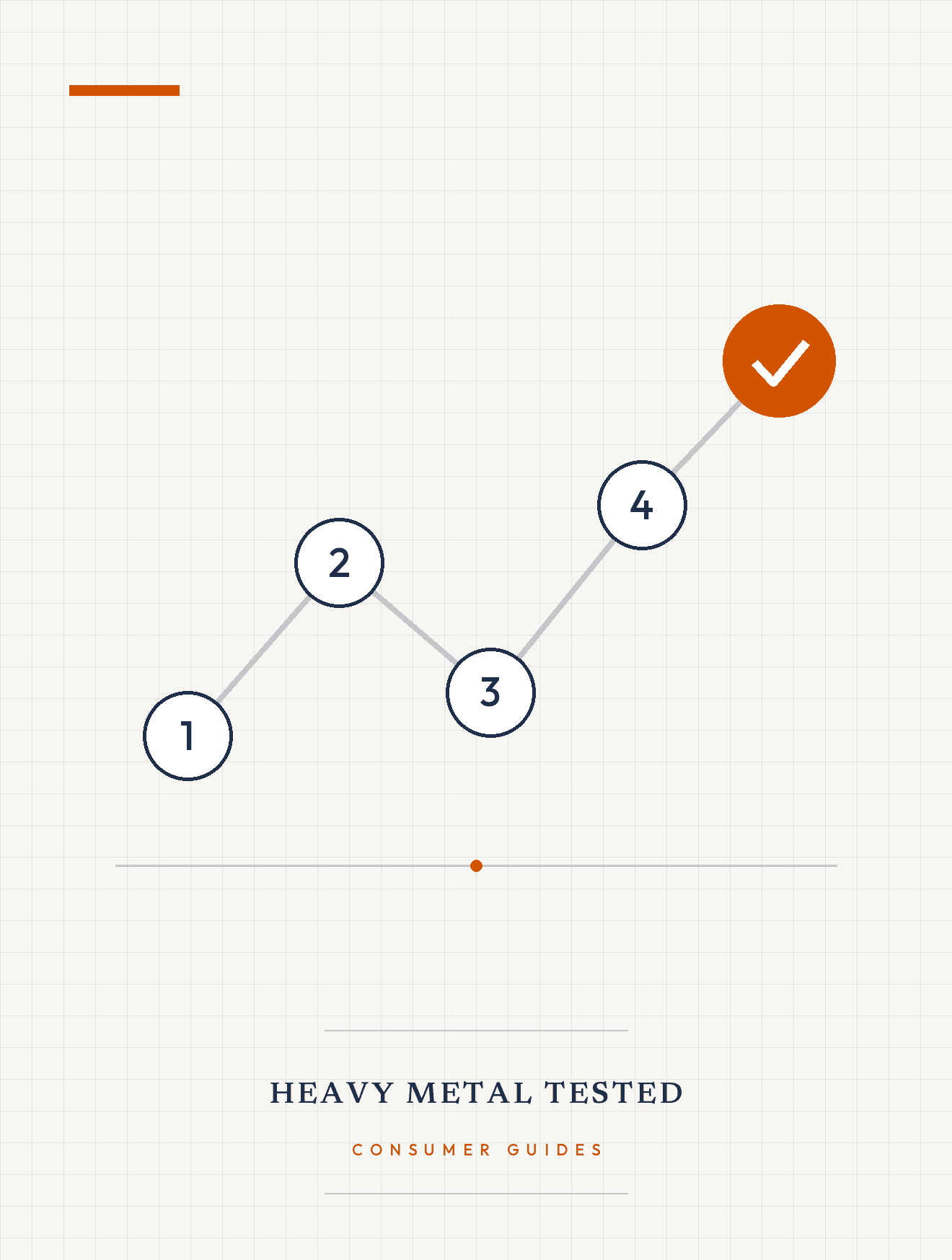
The steps a product goes through before it can carry the Heavy Metal Certified mark, and what each step tells you as a shopper.

Abstract
Keywords
how to get heavy metal certified, heavy metal certification process, Heavy Metal Certified mark, heavy metal tested eligibility, baby food certification steps, independent lab testing heavy metals

A product can only carry the Heavy Metal Certified mark after the brand asks for it, the product is tested through an independent laboratory, and the results meet a published standard. The mark then has to be renewed with retesting every year. Knowing those steps helps parents read the mark accurately, and it helps brands understand what they are signing up for.
Step 1: The brand chooses to apply
Certification is voluntary. No government agency requires it, and many good products carry no mark simply because the brand has never applied. The process usually starts with a conversation about which products are in scope, because certification is granted one product at a time, not to a whole brand.
Step 2: The product is tested through an independent lab
Testing is done through a qualified independent laboratory accredited to ISO/IEC 17025, the international standard for testing labs. The brand does not grade its own results. The Paleo Foundation runs the Heavy Metal Tested program as a certification organization. It is not a lab and not a government agency.
Step 3: Results are compared with a published standard
The standard covers eight metals: lead, arsenic, cadmium, mercury, chromium, nickel, tin, and aluminum. The limits are public, so anyone can read them on Heavy Metal Certified. A product that meets the standard can be licensed to use the mark. A product that does not meet it does not get the mark. When a product does not meet the standard.
Step 4: The mark is licensed for that product
The mark applies to the exact product that was tested. A certified pouch does not mean the rest of the brand's catalog is certified, and a certified adult supplement does not cover a children's version.
Step 5: The product is retested every year
Certification lasts one year. To keep the mark, the product has to be retested and meet the standard again. If it does not, the mark is not renewed. Annual recertification.
What this means for parents
When you see the mark, you know that specific product was tested by an independent lab within the last year and met a published standard. You do not know that the food has zero metals, because trace amounts are in almost all food. The mark is also not a medical judgment or a safety guarantee. If you have questions about a specific product, ask the brand when it was last certified. What the mark means.
A product without the mark has not failed anything. Most products have never been submitted for certification. Posted lot results, such as the QR codes California requires on many baby food packages, are another useful source. QR batch data vs a certification mark.
What this means for brands
Before applying, it helps to have a short list of the products you want certified, their formats (pouches, cereals, snacks, drinks, or supplements), any lot testing you already run, and who in your company owns on-pack claims. Be ready for the possibility that a product will not meet the standard at first testing or at a yearly retest. Certification does not replace any legal testing or disclosure duty your products already have. Lot testing vs certification.
FAQ
Can any brand apply for the Heavy Metal Certified mark? Brands that make food, supplement, and consumer products can ask about certification. Each product is evaluated separately against its published standard.
Who does the testing? A qualified independent laboratory accredited to ISO/IEC 17025. The brand does not grade its own results.
How long does certification last? One year. The product must be retested and meet the standard again to keep the mark.
What happens if a product does not meet the standard? It does not get the mark. If a certified product misses at its yearly retest, the mark is not renewed.
Does the mark mean a product is safe? No. It means that product met a published heavy metal standard when tested. It is not a safety guarantee.
Learn more
- What Heavy Metal Tested certification is
- What the Heavy Metal Certified mark means
- Annual recertification
- Heavy metals in children's supplements
Want to talk about certifying a product? Book a 30-minute call.
Case Studies You May Be Interested In
 Is Iron a Heavy Metal? Essential vs. Toxic Metals List
Why iron on a label isn't the same as lead in a test result.
October 13, 2026
 What's in Your Cat's Food? A 5-Minute Heavy Metals Check
A calm, practical way to check what's in your cat's bowl.
October 12, 2026