



QR Code Test Results vs a Certification Mark on Baby Food
The numbers, and the standard behind them.
QR Code Test Results vs a Certification Mark on Baby Food

Abstract
Keywords
baby food QR code, baby food QR code heavy metals, AB 899 QR code, baby food test results lot, how to read baby food test results, certification mark vs QR code

If you have bought baby food recently, you may have noticed a QR code with a line like "For information about toxic element testing on this product, scan the QR code." That code is there because of California's AB 899, and it links to heavy metal test results for the product.
Here is how to read those results, how they compare with a certification mark, and how brands can make both more useful.
Why the QR codes are there
Under AB 899, baby-food makers selling in California must test their products at least monthly for arsenic, cadmium, lead, and mercury. Since January 1, 2025, they have had to post the results on their websites, by production lot. If the product is tested for a metal that has an FDA action level, the label must also carry a QR code linking to those results and to FDA information on the health effects. AB 899 explained.
How to read QR results
- Scan the code on the package.
- Find your lot. Match the lot number or best-by date printed on your package.
- Look at each metal. Results are usually reported in parts per billion (ppb) or micrograms per kilogram (µg/kg), which are the same thing.
- Note "not detected" results. They mean the level was below what the lab could measure, not necessarily zero.
For context, FDA's lead action levels for packaged baby food are 10 ppb for most fruits, vegetables, and mixed foods, and 20 ppb for single-ingredient carrots or sweet potatoes and dry infant cereals. Action levels are enforcement thresholds, not a line between safe and unsafe. FDA levels explained.
QR results vs a certification mark
| QR code test results | Heavy Metal Certified mark | |
|---|---|---|
| What it shows | Measured levels for a specific lot | That the product met a published standard |
| Who issues it | The brand, based on its testing | An independent certification program |
| Metals covered | Arsenic, cadmium, lead, mercury | Those four plus chromium, nickel, tin, and aluminum |
| What a parent does with it | Reads and interprets the numbers | Recognizes the mark and can read the standard |
| How long it applies | That lot | One year, with retesting |
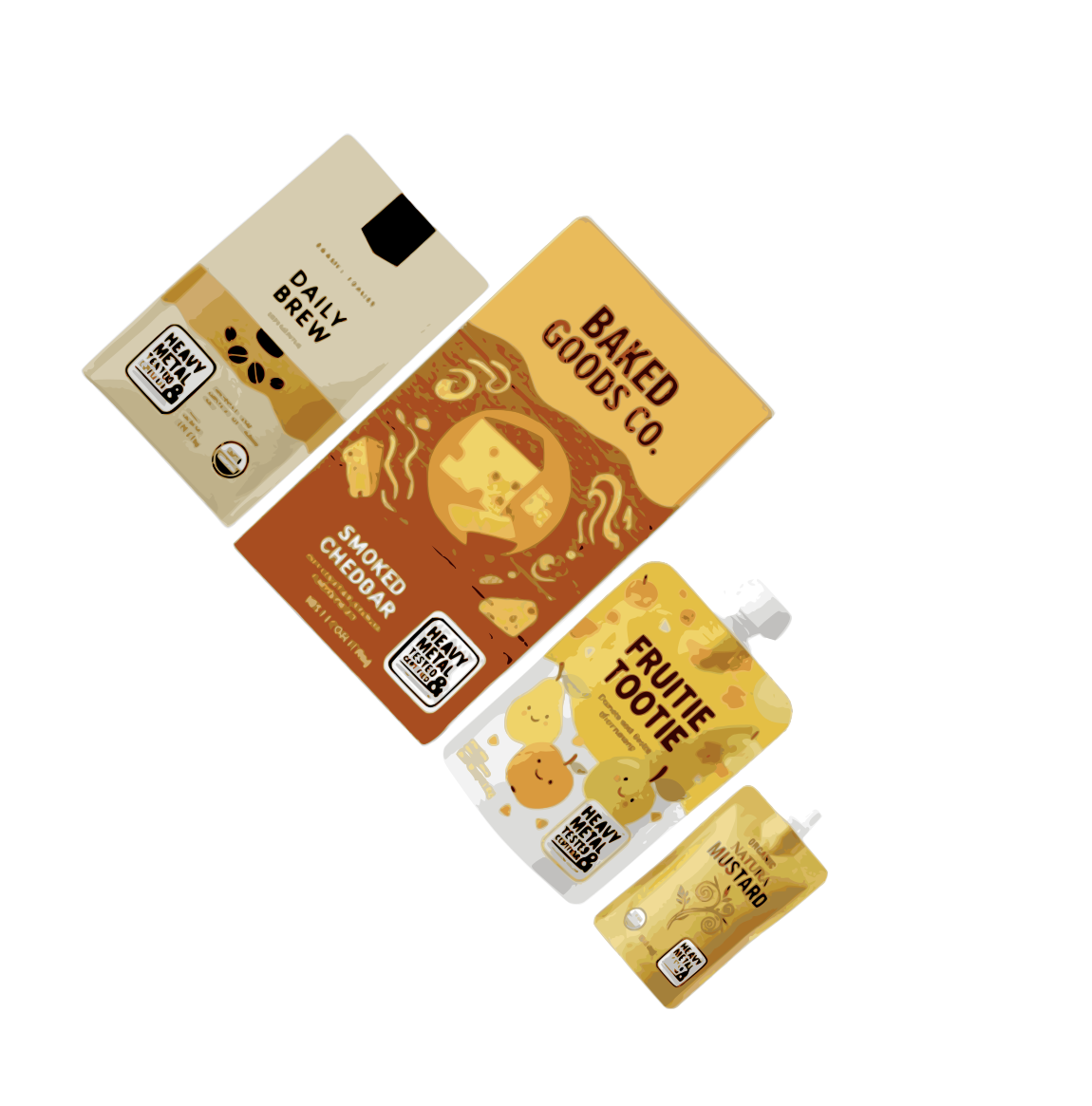
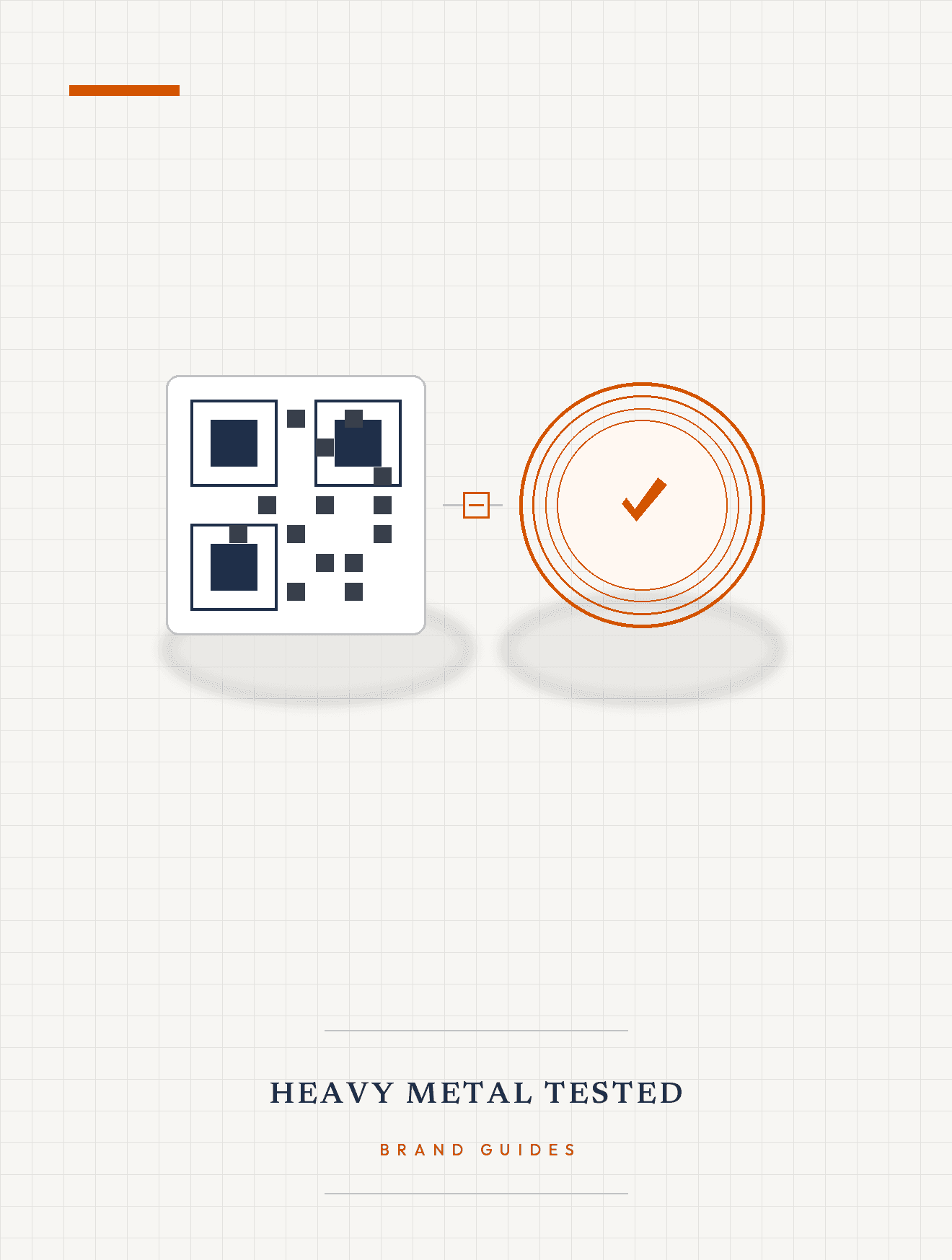
The two are complementary. The QR code gives full transparency on the numbers. The mark gives a quick, independent answer to "does this product meet a published standard?" without the parent needing to interpret lab data.
For brands: making both work
Make the QR landing page easy to use:
- Let parents search by lot number or best-by date.
- Explain units and "not detected" in plain language.
- Link to FDA's guidance on the health effects of each metal, as the law requires.
- Keep results up for the product's shelf life plus one month, as AB 899 requires.
Keep the claims straight:
- A QR code is a disclosure, not a certification. Do not describe it as a seal.
- Use the Heavy Metal Certified mark only on products that hold it.
- Certification does not satisfy AB 899. Both stay in place.
- Avoid "free of heavy metals" language on either. Claim language guide.
FAQ
Is a QR code the same as a certification? No. A QR code links to the brand's own test results. A certification mark means an independent program checked the product against a published standard.
What does "not detected" mean on a baby food test result? The level was below the laboratory's detection limit. It does not necessarily mean zero.
Can a product have both a QR code and a certification mark? Yes. They serve different purposes and can sit side by side.
Does certification replace AB 899 disclosure? No. Brands selling baby food in California must still test and disclose.
Does either one mean the product is safe? Neither is a safety guarantee. Both give you information about how the product measured.
Learn more
- Lot testing vs certification
- What the Heavy Metal Certified mark means
- What Heavy Metal Tested certification is
Next step
Already publishing lot results and considering certification? Book a 30-minute call. Bring one product and the QR landing page you use today.
Case Studies You May Be Interested In
 Who Regulates Heavy Metals in Pet Food?
The FDA, the states, and AAFCO each have a different job. Here is how they fit together.
October 22, 2026
 How Is Pet Food Tested for Heavy Metals?
Who tests pet food, what a lab does with a sample, and what to ask a company.
October 21, 2026