

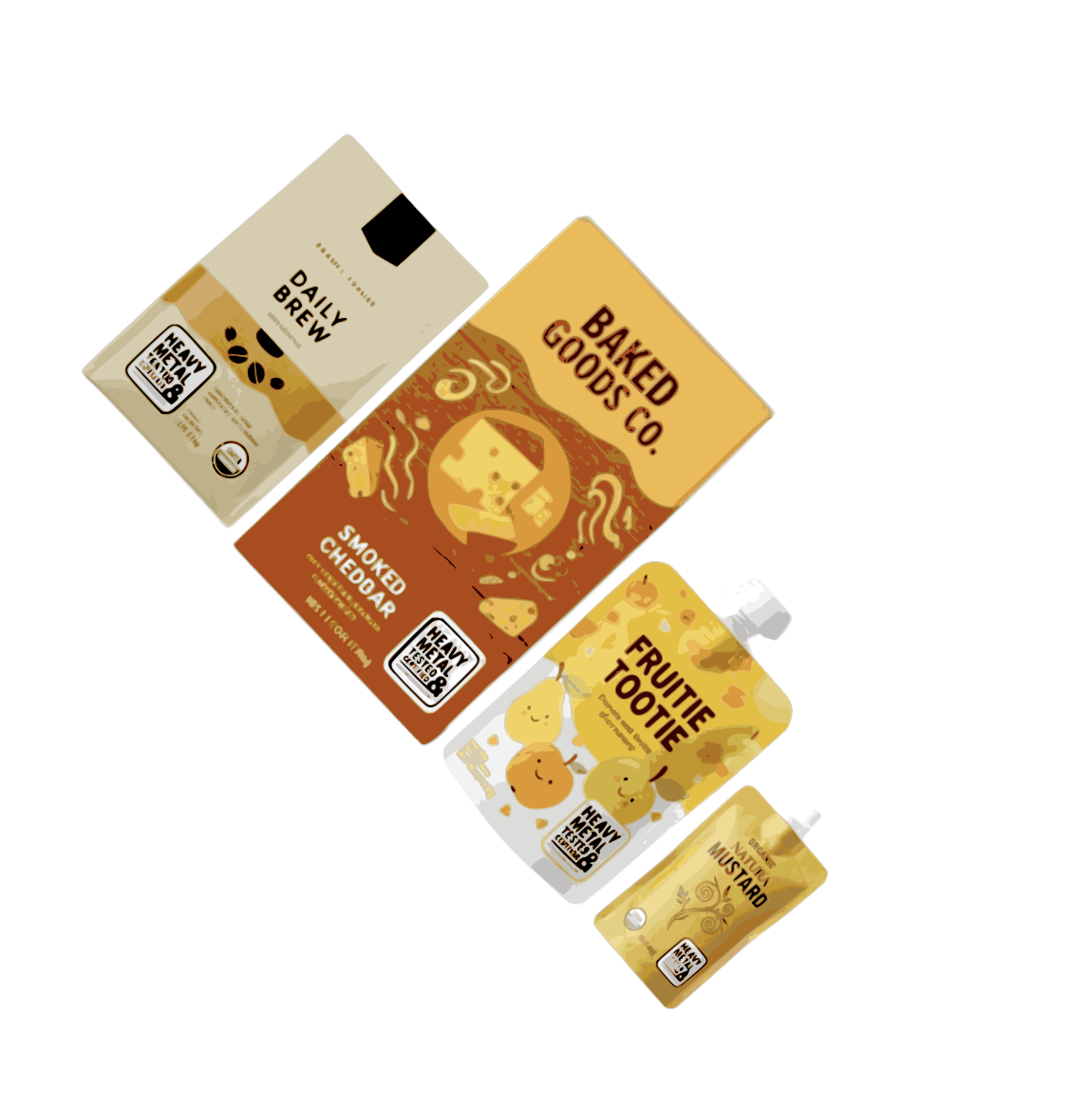
What the Heavy Metal Certified mark means
The Heavy Metal Certified mark means a product was evaluated against a published standard and tested through a qualified independent laboratory. The mark does not mean a product is safe, clean, or free of metals. Requirements and applications are published on Heavy Metal Certified.
See requirements on Heavy Metal CertifiedEight metals in the published program
Lead (Pb)
Lead is one of the eight metals in the published program. It is quantified by ICP-MS at an independent laboratory.
Arsenic (As)
Total arsenic, and speciation when the published method separates inorganic from organic forms.
Cadmium (Cd)
Cadmium quantified by ICP-MS. Category limits are part of the published standard on Heavy Metal Certified.
Mercury (Hg)
Total mercury, and methylmercury where the published method calls for it.
Chromium (Cr)
Total chromium quantified by ICP-MS. Toxicity depends heavily on form, with hexavalent chromium behaving very differently from the trivalent chromium found in food.
Nickel (Ni)
Nickel quantified by ICP-MS. The EU introduced maximum levels for nickel across a range of foods in 2024, bringing new scrutiny to ingredients that take up nickel from soil.
Tin (Sn)
Tin quantified by ICP-MS, most relevant to canned and tinplate-packaged foods, where migration from the can into the food is the primary route.
Aluminum (Al)
Aluminum quantified by ICP-MS. It is not strictly a heavy metal, but it is included for dietary exposure, particularly in infant and cereal-based foods.