



When a Baby Food Product Does Not Meet the Standard: What Parents Should Know
A missed standard is a signal to check, not a reason to panic.
What it means when a baby food product goes over an FDA action level or misses a certification standard, and the practical steps that matter.

Abstract
Keywords
baby food does not meet standard, baby food recall heavy metals, FDA action level lead baby food, what to do baby food recall, baby food lead limit, certification mark baby food, infant rice cereal arsenic

When a baby food product goes over a limit, it usually reaches parents as a recall notice, a news story, or a posted test result that looks worse than expected. It is a signal worth acting on, but it is not proof that your child was harmed, and it says nothing about every other product on the shelf. Here is how the main limits work and what to do when a product you bought is involved.
The limits that apply to baby food
In January 2025, the U.S. Food and Drug Administration finalized action levels for lead in packaged foods meant for babies and young children under 2. The level is 10 parts per billion for most fruits, vegetables, mixtures, yogurts, custards, and single-ingredient meats, and 20 parts per billion for single-ingredient root vegetables and dry infant cereals. FDA guidance on lead in foods for babies and young children.
FDA also has an action level of 100 parts per billion for inorganic arsenic in infant rice cereal. An action level is the point at which FDA may consider a food adulterated and take enforcement action, alongside other factors. It is not a promise that food below the level contains no metals. More background: FDA Closer to Zero.
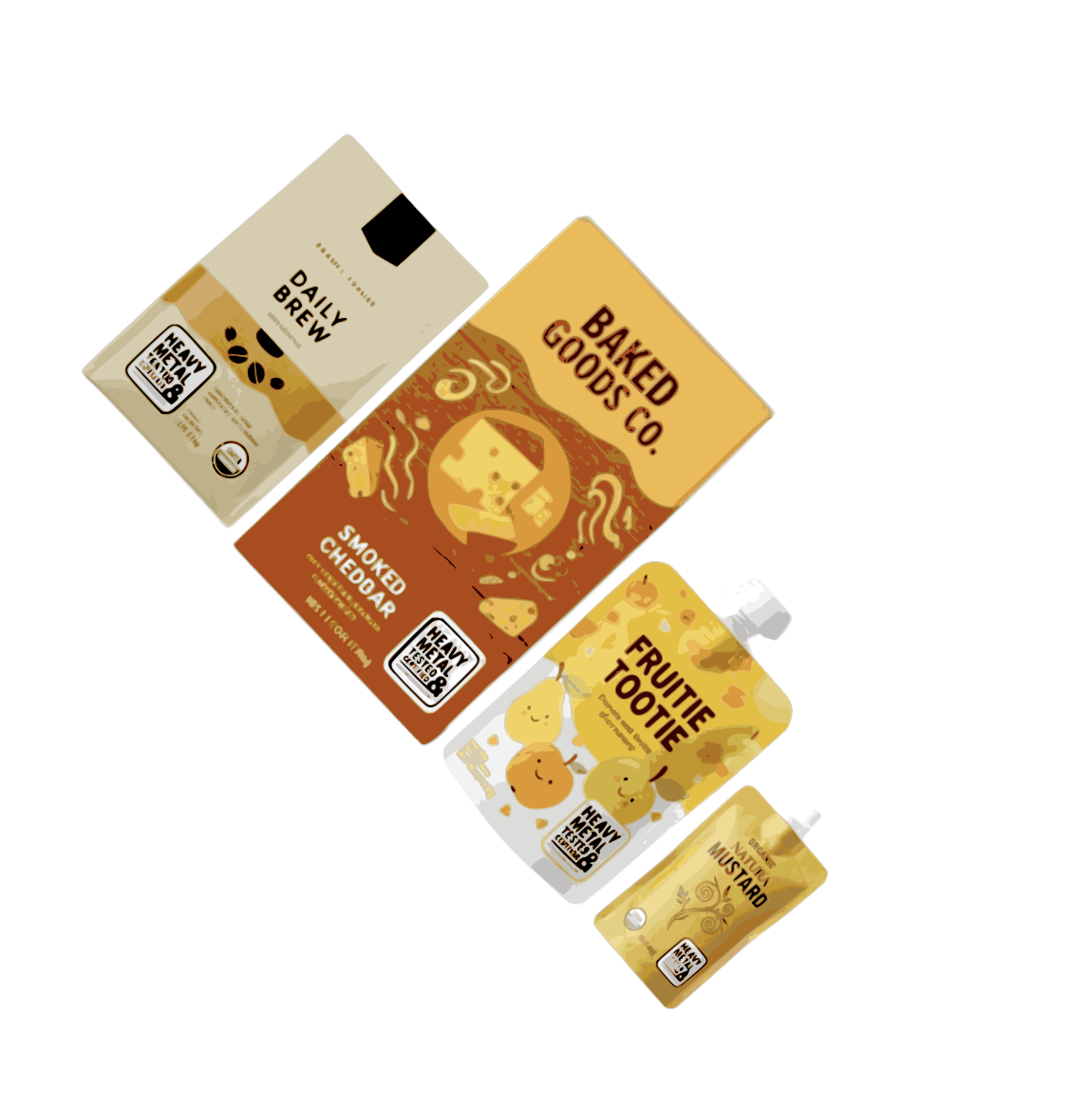
Certification programs work differently. The Heavy Metal Certified mark is licensed only to a specific product that was tested through a qualified independent laboratory and met a published standard covering eight metals, with retesting every year. If a product does not meet that standard, it does not get the mark. If it misses at the yearly retest, the mark is not renewed. What the mark means.
What a missed standard tells you
A result over a limit tells you that one product, and usually specific lots of it, measured higher than that limit allows. That is useful information, and it is the reason recalls and posted results exist.
It does not tell you that your child is unsafe or has been harmed. Exposure depends on how much and how often a child ate the food, along with everything else in their diet. It also does not tell you that the whole brand is a problem. Results are product-specific and often lot-specific, so another item from the same maker may have tested very differently.
A product that simply does not carry a certification mark is a different case. Most products on the shelf have never been through a certification program at all, so no mark means no information, not a failed test. Lot testing vs certification.
What to do if a product you bought is involved
- Check the exact product and lot. Recall notices list product names, sizes, and lot codes or best-by dates. Compare them to the package in your pantry before throwing anything out.
- Stop serving a recalled product. Follow the notice for a refund or return. Keep the package or a photo of the lot code until the refund is settled.
- Talk with your pediatrician if you are worried. Tell them what your child ate and for how long. They can decide whether a blood lead test makes sense. CDC recommends that approach for families affected by the 2023 cinnamon applesauce pouch recall, which was linked to hundreds of cases of elevated blood lead. CDC outbreak summary.
- Look up recalls directly. FDA lists food recalls and safety alerts in one place, and you can check it any time you hear about a problem secondhand. FDA recalls and safety alerts.
- Keep rotating foods. Offering a variety of fruits, vegetables, and grains keeps any one food from dominating the week, which is good practice whether or not a recall is in the news.
- Check QR codes and posted results. California's AB 899 requires many infant and toddler food makers selling in the state to post arsenic, cadmium, lead, and mercury results. QR batch data vs a certification mark.
Why a mark can be withheld
A certification mark only means something if products that miss the standard do not get it. That is why the Heavy Metal Certified mark is licensed one product at a time and has to be renewed with retesting every year. When you see the mark, it tells you that product met the published standard when it was tested. It does not mean the food is free of metals, and it is not a safety guarantee. Annual recertification.
FAQ
Does a recall mean my baby was harmed? Not necessarily. A recall means specific lots measured over a limit. If your child ate the product often or for a long time, ask your pediatrician whether a blood lead test is worth doing.
If one product from a brand misses a limit, should I avoid the whole brand? Results are specific to a product and often to a lot. Check whether the items you actually buy are named in the notice.
Does a product without a certification mark fail the standard? No. Most products have never been submitted for certification, so the missing mark tells you nothing either way.
What happens if a certified product misses the standard at its yearly retest? The mark is not renewed for that product. A mark is licensed one product at a time and depends on meeting the published standard.
Is food under the FDA action level free of heavy metals? No. Action levels mark the point where FDA may act. Food below them can still contain small amounts of metals, which is why variety and whole foods still matter.
Learn more
- What the Heavy Metal Certified mark means
- Lot testing vs certification
- Heavy metals in toddler applesauce
- What Heavy Metal Tested certification is
Make baby or toddler food? Book a 30-minute call about certification.
Case Studies You May Be Interested In
 Is Iron a Heavy Metal? Essential vs. Toxic Metals List
Why iron on a label isn't the same as lead in a test result.
October 13, 2026
 What's in Your Cat's Food? A 5-Minute Heavy Metals Check
A calm, practical way to check what's in your cat's bowl.
October 12, 2026