



What Is Heavy Metal Tested Certification?
Independent testing. A published standard. Renewed every year.
What Is Heavy Metal Tested Certification?

Abstract
Keywords
Heavy Metal Tested certification, Heavy Metal Certified, what is heavy metal certified, heavy metal certification food, heavy metal testing certification, Paleo Foundation heavy metal, third-party heavy metal certification

Heavy metals like lead and arsenic are naturally present in soil and water, so trace amounts show up in nearly all food. For parents and shoppers, the hard part is knowing which products have been independently checked, and against what.
Heavy Metal Tested certification is designed to answer that with a simple mark on the package.
The short version
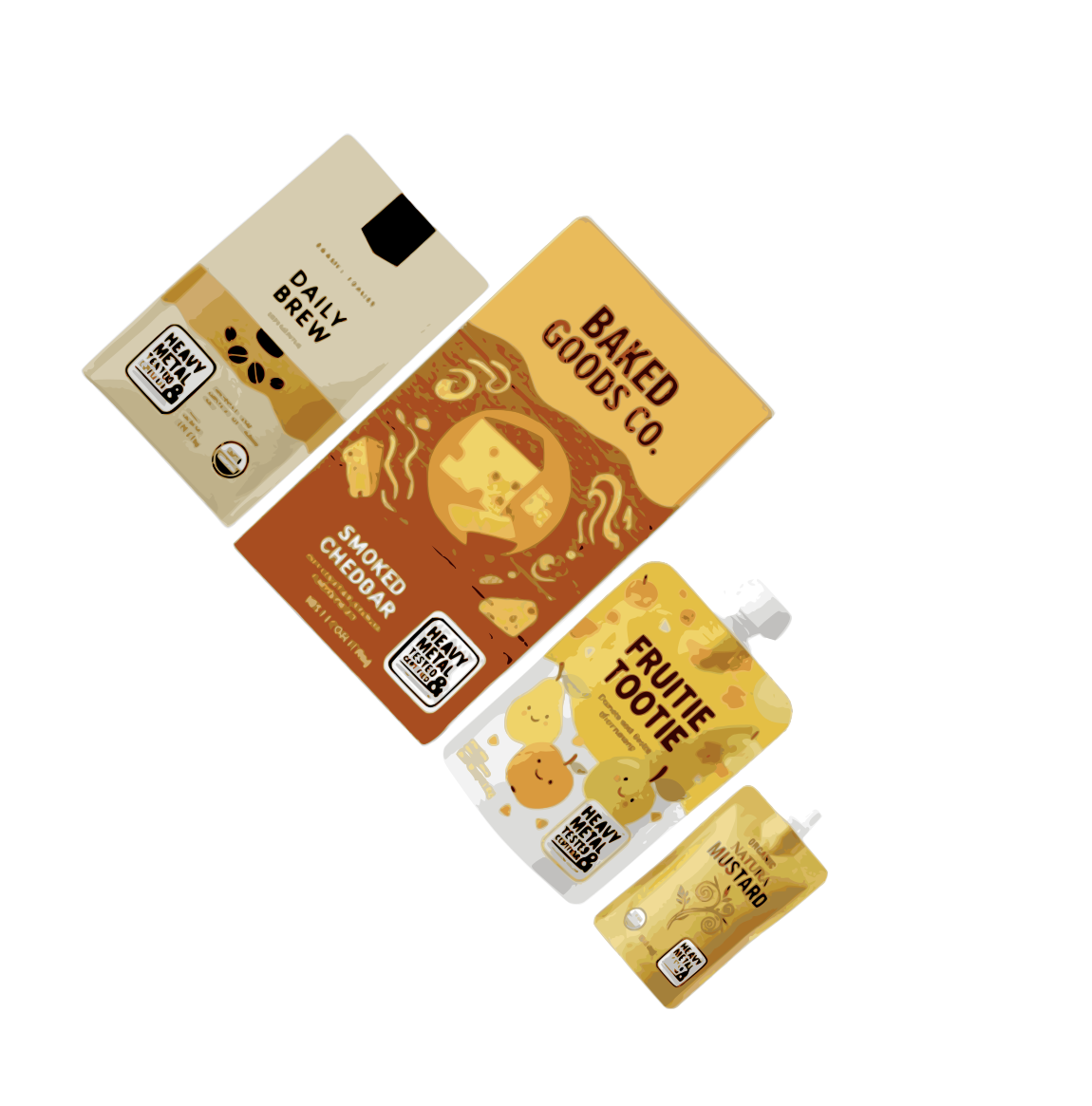
Heavy Metal Tested is an independent certification program from the Paleo Foundation. Products that qualify carry the Heavy Metal Certified mark, which means:
- Independently tested. The product was tested through a qualified independent laboratory accredited to ISO/IEC 17025, the international standard for testing labs.
- Held to a published standard. It met limits for eight metals: lead, arsenic, cadmium, mercury, chromium, nickel, tin, and aluminum.
- Product-specific. The mark covers that product, not the whole brand.
- Current. Certification lasts one year and renews with retesting.
The standards are public on Heavy Metal Certified, so anyone can read what the mark stands for.
What the mark does not mean
- Not "zero." Trace metals are in almost all food. The mark means levels were within a published standard.
- Not a safety guarantee. It tells you how the product measured, not a medical conclusion.
- Not a government program. Certification is voluntary, and no agency requires it.
- Not a verdict on other products. A product without the mark has not failed anything. Many brands simply have not applied.
Why a published standard matters
Many brands test their products, and in California, baby-food makers must post lot results online. Those numbers are valuable, but they can be hard for a parent to interpret. A published standard gives a clear reference point: the product was measured against these limits and met them.
A certification program and a laboratory also do different jobs. The lab measures. The certification program evaluates the results against the standard and licenses the mark. Heavy Metal Tested is the certification program. It is not a laboratory.
How products earn the mark
- Apply. The brand applies for specific products.
- Test. Testing is coordinated through a qualified independent ISO/IEC 17025 laboratory.
- Evaluate. Results are compared with the published standard for that product's subcategory.
- License. Products that meet the standard can carry the Heavy Metal Certified mark.
- Renew. Each product is retested every year to keep the mark.
If a product does not meet the standard, the mark is not licensed for it.
For parents
A certification mark is a quick signal in a busy aisle. It works best alongside the habits pediatricians recommend: serving a variety of foods, rotating grains instead of relying on rice, going easy on rice-based snacks, and skipping juice before age 1. Why parents look for a certification mark.
For brands
Infant, toddler, and family food is the program's first focus, and supplements and other consumer products can qualify when a published subcategory standard fits. Certification sits alongside your own lot testing and legal requirements like California's AB 899. It does not replace them. Certification for infant and toddler food brands.
FAQ
What is Heavy Metal Tested? An independent certification program from the Paleo Foundation. Products that meet a published heavy metal standard can carry the Heavy Metal Certified mark.
Is Heavy Metal Certified a laboratory? No. It is a certification program. Testing is done through qualified independent ISO/IEC 17025 laboratories.
Which metals does it cover? Lead, arsenic, cadmium, mercury, chromium, nickel, tin, and aluminum.
Does the mark mean a product is safe? No. It means the product met the published standard when tested. It is not a safety guarantee.
How long does certification last? One year, with retesting to renew.
Is it required by the government? No. Certification is voluntary.
Learn more
- What the Heavy Metal Certified mark means
- How independent labs fit in
- Questions QA and regulatory teams ask
Next step
Make food, baby food, or supplements? Book a 30-minute call to see whether your products are a fit.
Case Studies You May Be Interested In
 Heavy Metals in Dog Food: What Owners Should Know
What dog-specific research shows about protein source, raw game diets, and puppies.
October 16, 2026
 Where Do Heavy Metals in Cat Food Come From?
The main routes from farm and sea to your cat's bowl, and what to ask next.
October 15, 2026