




Heavy Metals in Dog Food: What Owners Should Know
What dog-specific research shows about protein source, raw game diets, and puppies.

Heavy metals in dog food: what studies have found, why protein source and raw game diets matter, and what to ask before you buy.

Abstract
Keywords
heavy metals in dog food, dog food heavy metals, lead in dog food, is there lead in dog food, raw dog food lead

If you've followed the news about heavy metals in cat food, or seen a story about lead in raw dog food, you may wonder whether your dog's bowl is any different. Researchers have studied dog food too, and a few findings are specific to dogs.
The short answer
Trace metals can turn up in dog food. The FDA's report on heavy metals in animal food explains that metals are found in air, water, and soil, so they can't always be kept out entirely, and that high levels can be toxic. Most studies of dog food found levels below maximum tolerable limits, with some exceptions. Two things stand out for dogs: the main protein source, and raw diets made with game birds shot with lead. For the routes metals take into pet food in general, see our post on where heavy metals in cat food come from.
What studies of dog food have found
A 2018 US study in Frontiers in Veterinary Science tested dry dog foods built on fish, poultry, or red meat. Its authors judged harmful long-term exposure highly unlikely for most foods. Still, a few products at the high end for lead gave them pause, because so little is known about lead in dogs.
A 2021 study from Brazil in Scientific Reports tested both dog and cat foods. In that study, lead was above the maximum tolerable level in a larger share of dog foods than cat foods (80.55% of the dog foods tested), though only two dog foods exceeded it by more than double. Mercury was above the tolerable level in every food tested, but the fish meal had no detectable mercury, and the authors suggest the mercury may not have been methylmercury, the more toxic form. No dog or cat food exceeded the level for cadmium. Dry foods were higher than wet foods in most metals.
What about price? A 2021 study from Spain found no important differences in most toxic elements between premium and low-cost dry foods. A 2025 study from South Africa, which tested 31 brands, found more results over tolerable levels in premium brands than in lower-priced supermarket brands, and in dog brands more than cat brands. In those studies, price and premium labeling didn't predict lower levels. A UK study by Davies and colleagues also covered both species and found that some foods, if fed exclusively over a long time, could affect pets' health.
Protein source: fish, red meat and poultry
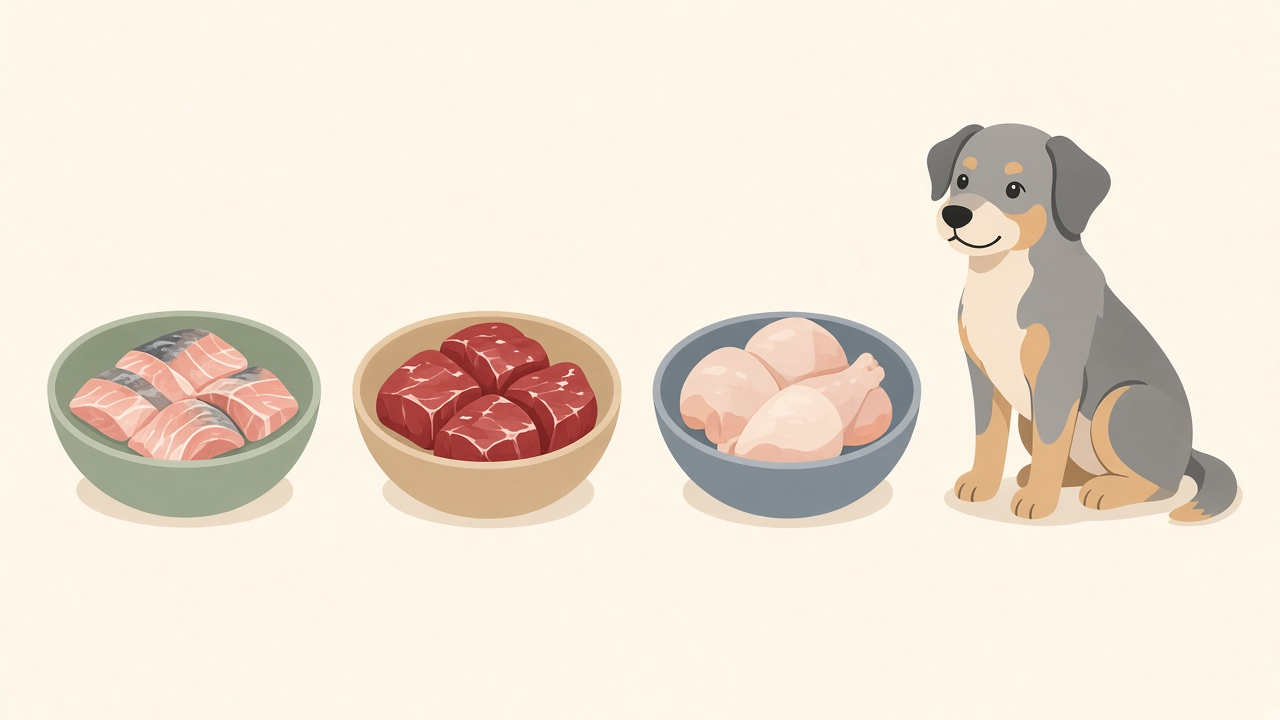
The 2018 US study compared 51 dry dog foods, 17 built on each protein. Fish-based diets had higher arsenic, cadmium, and mercury. Red meat-based diets, made with beef, venison, or bison, had higher lead. Poultry-based diets were relatively lower overall.
The authors also explain why dogs may take in more than people do. Dogs eat more for their body size, partly because many diets use whole meat meals that can include organ meats. The authors name marine fish and organ meats as sources of cadmium in pet foods.
This is one study of one food format, describing groups of products, not any single bag. If you feed a fish or red meat recipe, it's reasonable to ask the company about. For more on mercury and arsenic, including why the form of each matters, see our post on lead, arsenic, and mercury in cat food. Cadmium gets its own post.
Raw diets and lead from shot game
The dog-specific story the cat articles don't cover is lead from shot game. A 2023 UK study in Ambio tested dog foods made with pheasant, a bird that in the UK is mostly shot with lead. Most samples from three raw pheasant products exceeded the EU legal limit for lead in animal feed. Lead was not over the limit in processed pheasant or chicken products.
The researchers think processing may be part of the reason. Raw pet food is usually minced, and mincing may break lead shot into smaller pieces that are easier to absorb. They concluded that dogs fed such food often are at risk of harm to their health.
This finding is about game birds shot with lead, not raw food in general. As one of the authors noted in the University of Cambridge news release, some producers may source pheasants that were not shot with lead, and owners can ask about this when they buy.
Why puppies are a special case
The Cambridge release notes that young animals tend to absorb more of the lead they swallow than adults do, and that the developing nervous system is especially affected by lead. The 2018 US authors make a similar point about growing dogs and recommend that puppy formulas be tested for lead, given how little is known about lead in young dogs. If you're feeding a puppy, especially a raw or game-based diet, it's worth raising with your vet and asking the company about lead testing.
Lead from outside the bowl
Food isn't the only place a dog can meet lead. The Merck Veterinary Manual lists household sources such as old paint, dust from renovating older homes, ceramic glazes on food and water bowls, fishing sinkers, and lead shot. Merck notes that lead mainly affects the nervous system, the gut, and the blood.
What the research doesn't show yet
These studies are small, and most sampled foods outside the US. They measured metals in food, not in the dogs eating it, so they can't tell you what a particular food is doing to a particular dog. The 2018 authors themselves point to the lack of data in dogs. And in the US, the FDA has no set limits for heavy metals in animal food. It acts case by case when testing finds a problem.
What to ask
The same questions work for dog food as for cat food, and our 5-minute heavy metals check walks you through them. If you buy raw food made with game, add one more: ask whether the animals were shot with lead or with non-lead ammunition. If you're unsure which metals count as heavy, see Is Iron a Heavy Metal? If a company sends you results, here's how to read a heavy metal COA. For human food, see our guide to heavy metals in food.
FAQ
Is there lead in dog food? Studies have found it. The FDA's sampling of animal food found most results below maximum tolerable levels, but the Brazil study found lead above those levels in most of the dog foods it tested, and red meat recipes had more lead in the 2018 US study.
Does raw dog food have more heavy metals? The documented issue is raw food made with game shot with lead. In the UK study, raw pheasant products were high in lead, while the raw chicken product was not.
Are fish-based dog foods higher in mercury? In the 2018 US study, fish-based dry foods had higher mercury, arsenic, and cadmium than poultry or red meat recipes.
Is premium dog food lower in heavy metals? Not in the studies that checked. The Spain study found no important differences between premium and low-cost foods, and the South Africa study found more results over tolerable levels in premium brands.
This article is general information, not veterinary advice. If you have questions about your dog's health, contact your veterinarian.
Curious whether a brand tests for heavy metals? Heavy Metal Tested is a certification program that helps brands share independent results with owners. Learn how Heavy Metal Tested certification works.
Case Studies You May Be Interested In
 Where Do Heavy Metals in Cat Food Come From?
The main routes from farm and sea to your cat's bowl, and what to ask next.
October 15, 2026
 Lead, Arsenic, and Mercury in Cat Food: What We Know
For each metal: what it does, where it shows up, and how strong the evidence is.
October 14, 2026