



Lot Testing vs Certification for Baby Food: What Each One Does
A measurement and a mark do different jobs.
Lot Testing vs Certification for Baby Food: What Each One Does

Abstract
Keywords
lot testing vs certification, baby food lot testing, heavy metal testing baby food brands, certificate of analysis vs certification, Heavy Metal Certified mark, baby food quality testing

Most baby-food brands test their production lots for heavy metals, and in California, many are required to. So a common question is: if we already test every lot, what does certification add?
The short answer is that they do different jobs.
What lot testing does
A lot test measures the levels of each metal in a sample from a production run, using a defined method, at a specific time. It answers the question: what was in this lot?
That information is essential. Brands use it to:
- Check products against internal specifications
- Catch problems with ingredients or suppliers
- Meet legal requirements, like California's AB 899 monthly testing and disclosure
- Track trends over time
Lot data also has limits. Each result describes one sample at one point in time. And for most parents, a table of numbers on a website is hard to interpret.
What certification does
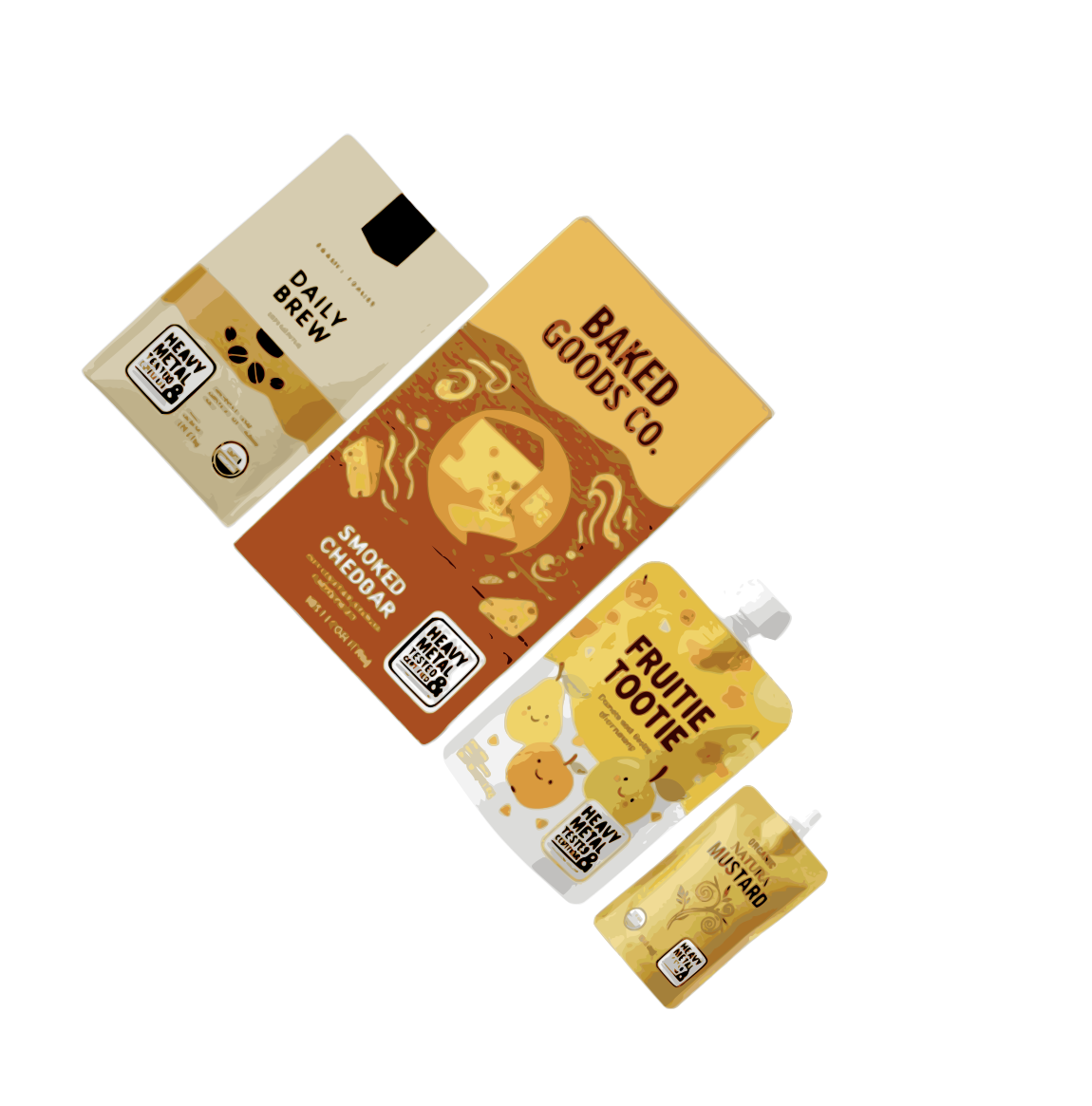
Heavy Metal Tested is an independent certification program from the Paleo Foundation. Certification evaluates a product against a published standard and, if it meets that standard, licenses the Heavy Metal Certified mark for that product.
- Testing is done through a qualified independent ISO/IEC 17025 laboratory.
- The standard covers eight metals: lead, arsenic, cadmium, mercury, chromium, nickel, tin, and aluminum.
- Certification lasts one year and renews with retesting.
It answers a different question: does this product meet a published standard, according to someone other than the brand?
Side by side
| Lot testing | Heavy Metal Tested certification | |
|---|---|---|
| Who runs it | The brand, often with a third-party lab | An independent certification program |
| What it measures against | Internal specs or legal requirements | A published subcategory standard |
| What parents see | Numbers, often via a QR code | A recognizable mark on the package |
| How long it applies | That lot | One year, with retesting |
| If results fall short | An internal quality event | The mark is not licensed |
Why brands use both
Lot testing and certification support each other:
- Lot testing keeps certification on track. Strong lot data between certification cycles helps a brand catch issues early, so recertification holds few surprises.
- Certification makes lot testing visible. Parents cannot audit a lab report in the aisle. A mark gives them a simple, independent signal.
- Neither replaces the other. Certification does not replace lot testing, incoming ingredient checks, or legal testing requirements.
Talking about each accurately
- Say "we test every lot" when that is what you do.
- Say "this product is Heavy Metal Certified" only when the product holds the mark.
- A passing lot test on its own does not make a product certified.
- Neither supports a claim that a product is free of heavy metals or safe. Claim language guide.
FAQ
Can a passing lot test be used as a certification claim? No. A lot test is a measurement. Certification is an independent evaluation against a published standard.
Is Heavy Metal Tested a laboratory? No. It is a certification program. Testing is done through qualified independent ISO/IEC 17025 laboratories.
If we already test every lot, why certify? Lot testing tells your team what is in each lot. Certification gives parents and retailers an independent mark they can recognize.
Does certification replace lot testing? No. Keep lot testing in place.
Does either one mean the product is safe? No. Both describe how a product measured.
Learn more
- QR code test results vs a certification mark
- Annual recertification
- What Heavy Metal Tested certification is
Next step
Own quality or regulatory for a baby-food line? Book a 30-minute call. Bring one product and your recent lot reports.
Case Studies You May Be Interested In
 Cadmium and Kidney Health in Cats: What Research Shows
What cat studies have measured, and why found together is not the same as caused.
October 17, 2026
 Heavy Metals in Dog Food: What Owners Should Know
What dog-specific research shows about protein source, raw game diets, and puppies.
October 16, 2026