





Cadmium and Kidney Health in Cats: What Research Shows
What cat studies have measured, and why found together is not the same as caused.
Cadmium and kidney health in cats: what studies in cats have found, what they cannot tell us yet, and questions worth asking your vet.

Abstract
Keywords
cadmium in cat food, cadmium cats kidney, cadmium kidney disease cats, cadmium fish cat food

If you have an older cat, maybe one already diagnosed with kidney disease, news about cadmium in cat food can land hard. It's natural to wonder whether the food played a part. Here is what research shows, what it doesn't, and why those are different things.
The short answer
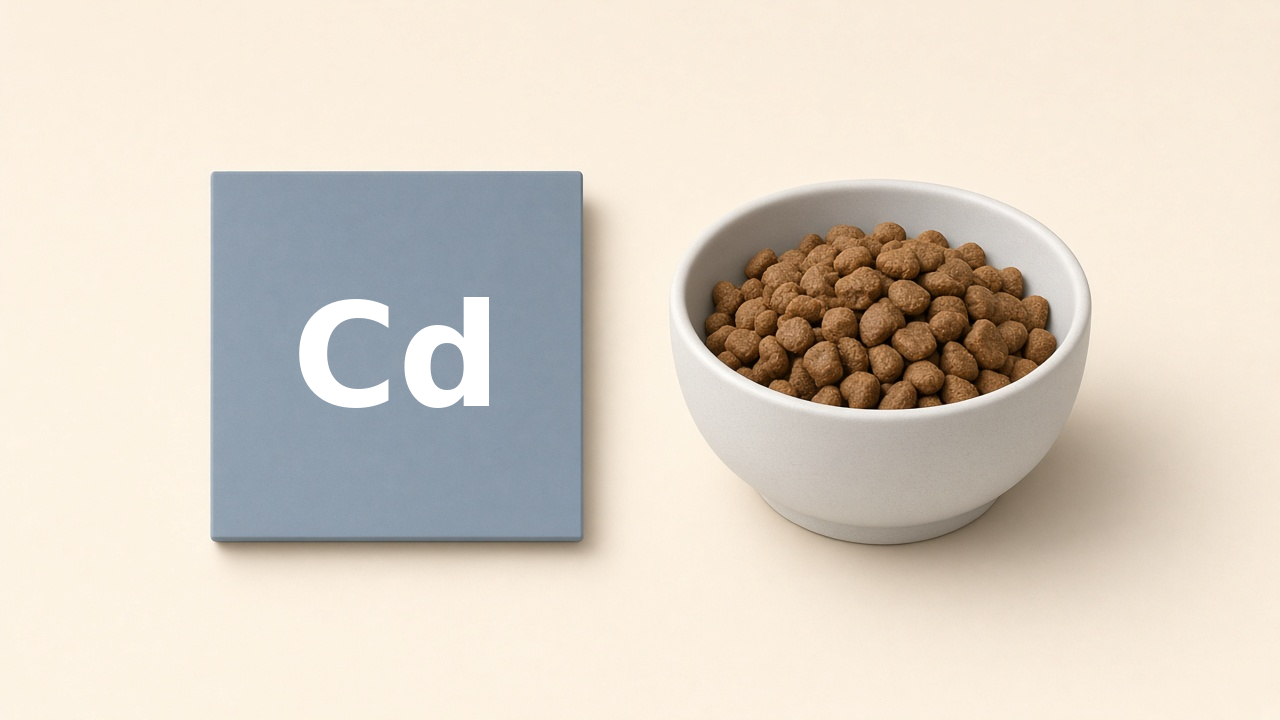
Cadmium can be present in cat food. In a 2021 study from Brazil, it was detected in most of the cat foods tested, though none exceeded the maximum tolerable level. Cadmium is stored in the kidneys and liver, and in people it builds up there slowly over years. Kidney disease is also common in older cats, and the Merck Veterinary Manual notes that it often develops for unknown reasons. One study found more cadmium in cats with kidney disease, but it can't show which came first. Current studies don't show that cadmium in food causes kidney disease in cats.
Why cadmium and kidneys come up together
Much of what's known about how cadmium behaves in the body comes from human research. As background for people, the FDA explains that the body clears cadmium slowly, so years of low exposure can build it up in the kidneys and liver. The FDA also notes that plants take up cadmium, and that levels are higher where some phosphate fertilizers are used and near smelting.
Research in dogs gives similar background. The authors of a 2018 study of dog foods describe cadmium being carried to the kidney and liver, and they name marine fish and organ meats as sources of cadmium in pet foods. They also judged harm from cadmium in pet food unlikely. These are facts about how cadmium moves, not findings about cat food or cat kidneys. For cadmium and people, see our review of cadmium in infants and children.
What studies of cat food have found
In the Brazil study, cadmium turned up in most cat foods, but no cat or dog food exceeded the maximum tolerable level for it. A 2026 study from Turkey in Veterinary Research Communications compared dry cat foods by main protein. Cadmium was higher in fish and red meat recipes than in poultry ones, and all the measured toxic metals stayed below regulatory limits.
In the FDA's report on heavy metals in animal food, the highest cadmium results came from mineral supplements and mixes. The FDA has no set limits for these metals in animal food and acts case by case. Put simply, cadmium can reach cat food through fish, organ meats, and mineral mixes, and our post on where heavy metals in cat food come from covers those routes.
What studies of cats have found
Two studies looked at cats themselves, not only at their food.
A 2014 study in BMC Veterinary Research measured cadmium and other elements in liver and kidney samples from 47 cats examined after death. Cadmium was lower in the inner part of the kidney than in the outer part and the liver, and how much was stored depended on age. Cats with chronic kidney disease had higher cadmium in the liver and the outer kidney than cats without it.
That is an association: the two were found together. The study can't tell whether cadmium played any part in the disease, whether the disease changed how cadmium was stored, or whether something else, such as age, explains both. The authors describe cadmium storage as affected by kidney disease and say their data can guide future research. They don't claim cadmium caused it.
The Turkey study measured metals in cats' blood and hair as well as in their food. It found no consistent build-up by protein source or by how long cats had eaten a diet. Its authors note that their design, a snapshot in time rather than long-term follow-up, can't rule out build-up or risk over many years.
Association is not cause
It's tempting to connect the dots: cadmium is stored in kidneys, and cats with kidney disease had more of it. But two things found together aren't proof that one caused the other.
Kidney disease is common. Merck describes chronic kidney disease as a common disease of older cats and dogs, a slow loss of kidney tissue that often happens for unknown reasons. Any group of older cats will include many with kidney disease, whatever they ate.
Age affects both. The tissue study found that storage depended on age, and older cats have had more years to store metals. Older cats are also the ones most likely to have kidney disease. That overlap alone could produce an association.
The direction is unclear. The authors' own wording, storage affected by kidney disease, points the other way: the disease may change cadmium levels, not only the reverse.
The studies are limited. One measured tissues from a small group of cats at a single point. The other was a snapshot of diets, blood, and hair. Neither followed cats over years to see which ones developed kidney disease.
None of this means cadmium doesn't matter. It means current evidence can't answer the question you may be asking about your own cat.
What this means for you
If your cat is older or has kidney disease, talk with your vet about their diet. Your vet knows your cat's history and can help you weigh what matters most. If you want to know whether a brand tests for cadmium, our 5-minute heavy metals check shows you what to ask, and our guide on how to read a heavy metal COA can help if a company shares results. For the other three metals, see lead, arsenic, and mercury in cat food. Dog owners can read about heavy metals in dog food, and if you're unsure what counts as a heavy metal, see Is Iron a Heavy Metal?
FAQ
Is there cadmium in cat food? Studies have found it. In the Brazil study it was detected in most cat foods tested, and none exceeded the maximum tolerable level. In the Turkey study, all measured toxic metals stayed below regulatory limits.
Does cadmium cause kidney disease in cats? Current studies haven't shown that. One study found higher cadmium in the liver and kidneys of cats with kidney disease, but it couldn't show which came first, and age or other factors could explain both. Kidney disease is common in older cats and often has no known cause.
Are fish-based cat foods higher in cadmium? In the Turkey study, cadmium was higher in fish and red meat dry foods than in poultry ones, though all stayed below regulatory limits. A study of dog foods also names marine fish and organ meats as cadmium sources. That describes groups of products, not any one food.
Should my cat be tested for cadmium? That's a question for your vet, who can decide whether testing makes sense for your cat.
This article is general information, not veterinary advice. If you have questions about your cat's kidney health, contact your veterinarian.
Want to know whether a brand tests for cadmium and other heavy metals? Heavy Metal Tested is a certification program that helps brands share independent results with owners. Learn how Heavy Metal Tested certification works.
Case Studies You May Be Interested In
 Heavy Metals in Dog Food: What Owners Should Know
What dog-specific research shows about protein source, raw game diets, and puppies.
October 16, 2026
 Where Do Heavy Metals in Cat Food Come From?
The main routes from farm and sea to your cat's bowl, and what to ask next.
October 15, 2026