



What the Heavy Metal Certified Mark Means on a Package
What it tells you, and what it doesn't.
What the mark tells you about the product in your cart, what it does not, and how to check it.

Abstract
Keywords
Heavy Metal Certified mark, heavy metal certification label, what does heavy metal certified mean, baby food certification seal, heavy metal tested baby food, third-party tested baby food

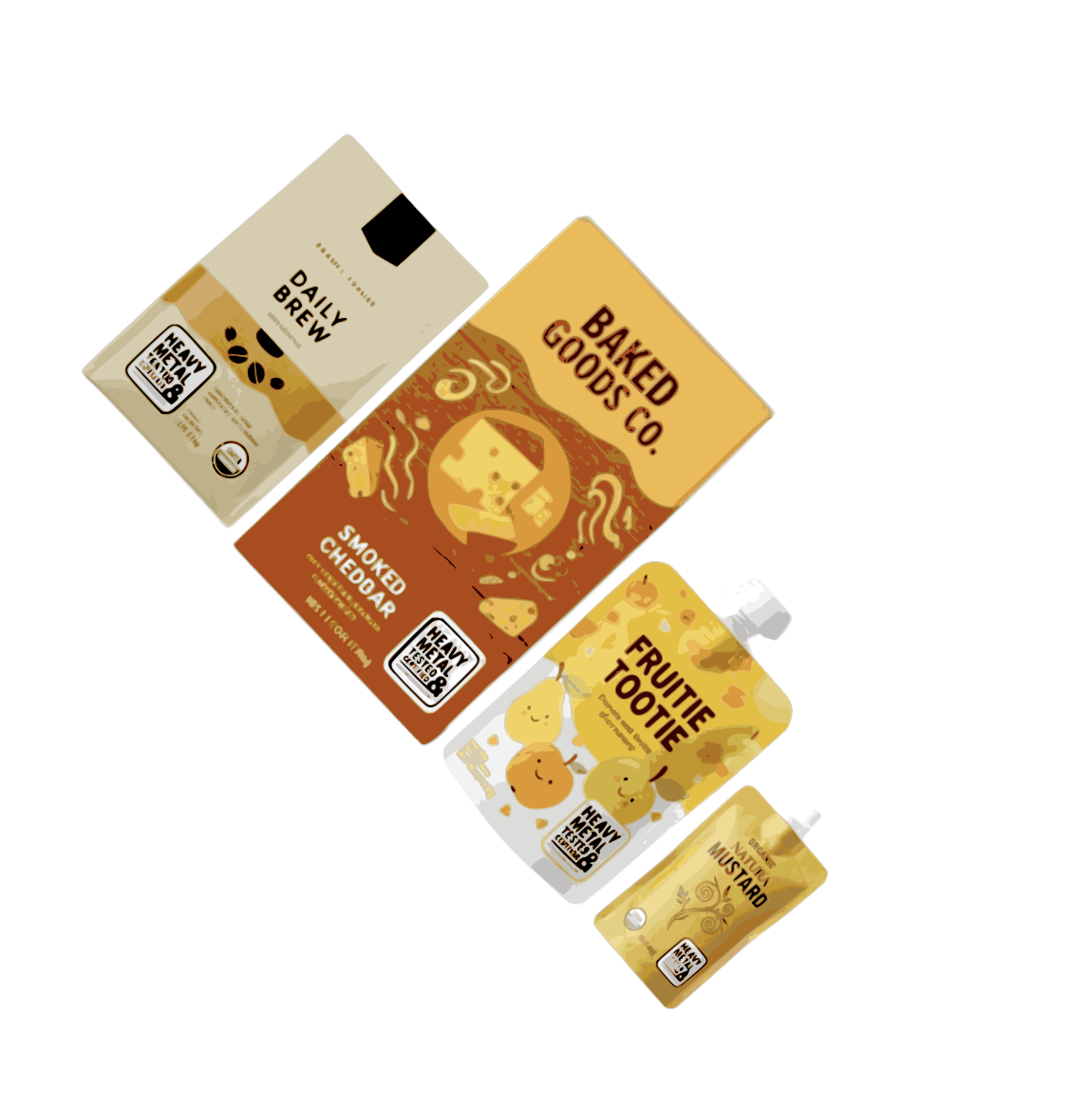
You are standing in the baby-food aisle and one pouch has a small seal that says Heavy Metal Certified. What does it actually tell you?
In short: someone other than the brand checked that specific product against a published rule, and it passed within the last year.
What the mark tells you
When you see the Heavy Metal Certified mark on a product, four things are true:
- The product was tested by an independent lab. Testing is done through a qualified independent laboratory accredited to ISO/IEC 17025, the international standard for testing labs. The brand does not grade its own results.
- It met a published standard. The standard covers eight metals: lead, arsenic, cadmium, mercury, chromium, nickel, tin, and aluminum. The limits are public, so anyone can read them on Heavy Metal Certified.
- It applies to that product. The mark is licensed one product at a time. A certified pouch does not mean the rest of the brand's catalog is certified.
- It is current. Certification lasts one year and requires retesting to renew. A product that does not meet the standard at retesting loses the mark.
The program behind the mark is Heavy Metal Tested, run by the Paleo Foundation, an independent certification organization. It is a certification program, not a lab and not a government agency.
What the mark does not tell you
It is just as useful to know the limits:
- It does not mean the food has zero heavy metals. Trace amounts are in almost all food, because metals are naturally present in soil and water. The mark means levels were within a published standard.
- It is not a safety guarantee. It tells you how the product measured against a standard. It is not a medical judgment.
- It is not a government seal. Certification is voluntary. No agency requires it.
- A missing mark is not a warning. Many good products are not certified simply because the brand has not applied.
How to check a mark
- Note the exact product name and size on the package. The mark applies to that product, not the whole brand.
- Read the published standard on Heavy Metal Certified if you want to see the limits behind the mark.
- If you have questions about a specific product, ask the brand when it was last certified. A brand using the mark should be able to tell you.
How this fits with other information on the pack
You may see other things on a baby-food package too:
- A QR code with test results. California law requires many baby-food makers to post their lab results online, and a QR code often links to them. Those results describe specific production lots. QR codes vs certification marks.
- "Organic." Organic rules cover farming practices like pesticides. They do not set limits for heavy metals.
- Other seals. Other organizations, such as Clean Label Project, run their own programs with their own rules. How they compare.
FAQ
Does the Heavy Metal Certified mark mean the food is safe? No. It means the product was tested through an independent lab and met a published standard. It is not a safety guarantee.
Does the mark cover every product from that brand? No. It is licensed one product at a time.
How long does certification last? One year. The product must be retested to keep the mark.
Which metals does the standard cover? Eight: lead, arsenic, cadmium, mercury, chromium, nickel, tin, and aluminum.
Is the mark required by the government? No. It is voluntary.
Learn more
- What Heavy Metal Tested certification is
- Why parents look for a certification mark
- Why certification is renewed every year
Make baby food and want to use the mark? Book a 30-minute call.
Case Studies You May Be Interested In
 Who Regulates Heavy Metals in Pet Food?
The FDA, the states, and AAFCO each have a different job. Here is how they fit together.
October 22, 2026
 How Is Pet Food Tested for Heavy Metals?
Who tests pet food, what a lab does with a sample, and what to ask a company.
October 21, 2026