



Heavy Metals in Kitten Food: What New Cat Owners Should Know
Why young animals take in more lead, and what a growth label does and does not tell you.
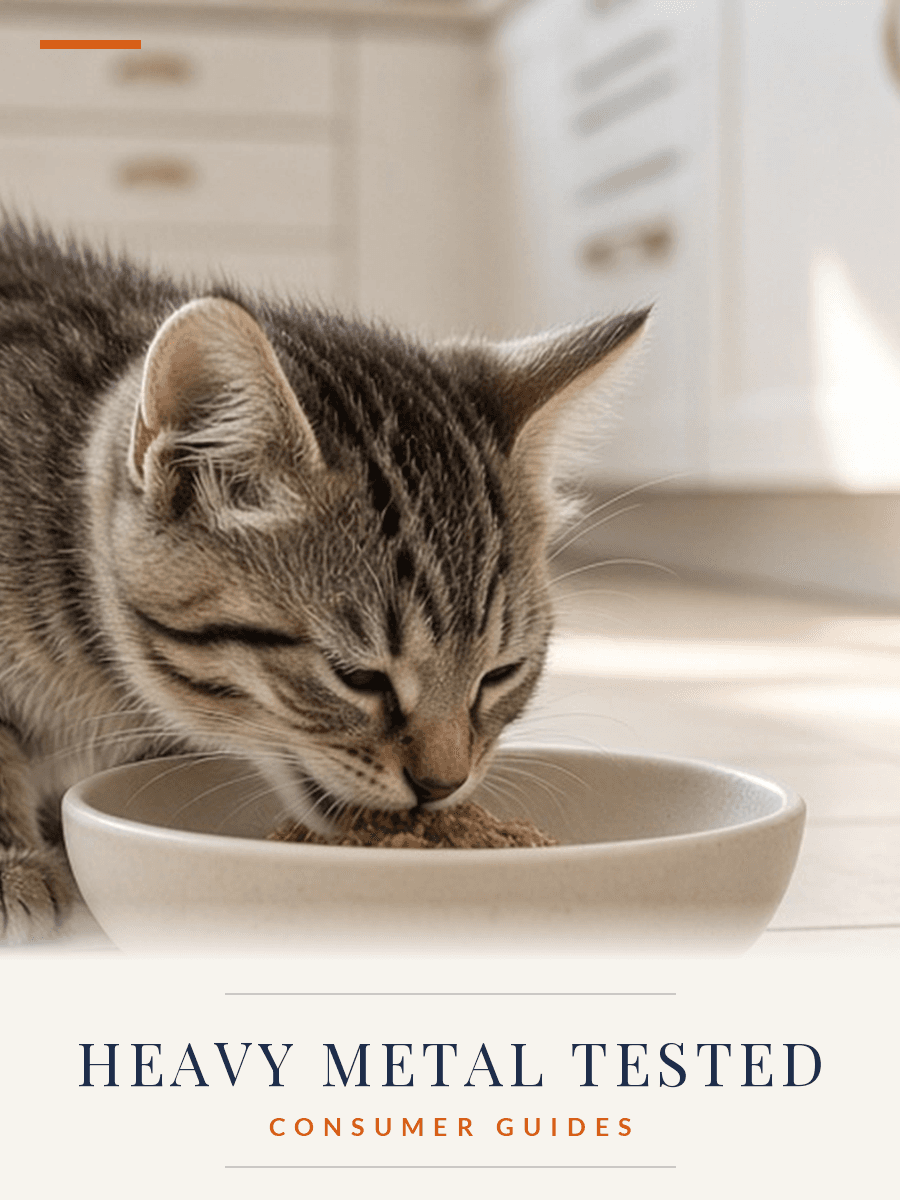
Heavy metals in kitten food: why young animals absorb more lead, what growth formulas mean, and what new cat owners can ask brands and vets.

Abstract
Keywords
heavy metals in kitten food, kitten food heavy metals, lead in kitten food, is kitten food tested for heavy metals, growth formula cat food

Bringing home a kitten comes with a long list of choices, and food is near the top. If you've seen news about heavy metals in cat food, you may be wondering whether a kitten formula is any different, or whether the label already covers it. Here's what research shows, what a kitten food label does and doesn't tell you, and what to ask.
The short answer
Trace metals can turn up in pet food. The FDA's report on heavy metals in animal food explains that metals are found in air, water, and soil, so they can't always be kept out entirely. Young animals absorb lead more readily than adults, according to the Merck Veterinary Manual. A "growth" or "all life stages" statement on a label describes nutrition. It is not a heavy metal test. And research that looks at kitten food specifically is very limited.
Why young animals take in more lead
Merck explains the reason in simple terms. Lead crosses the gut using the same transport the body uses for calcium. Young, rapidly growing animals need more calcium, so they also take up lead more readily than adults do.
Other researchers make the same point. The authors of a 2018 US study of dry dog foods note that young animals absorb more lead, and a University of Cambridge news release on a dog food study adds that young animals tend to absorb more of the lead they swallow than full-grown animals, and that the developing nervous system is especially affected by lead. Both are about young animals in general, and both come from dog research. The sources we reviewed did not measure lead uptake in kittens specifically.
Body size matters too. A 2025 study from China found that lighter cats and dogs had higher hazard estimates because of their smaller body mass. Our post on cats vs. dogs and heavy metal exposure explains why per pound matters more than per bowl.
What "growth" and "all life stages" on the label mean
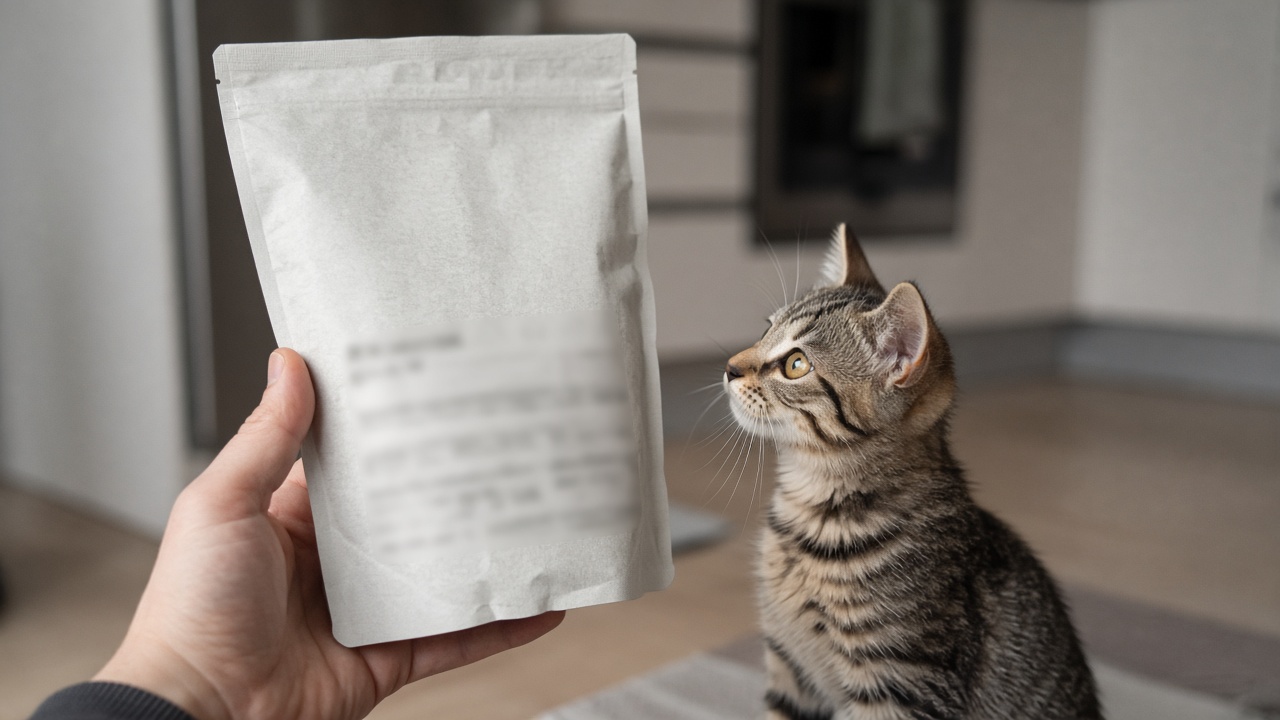
Most pet foods should carry a nutritional adequacy statement, usually in small print on the back or side of the package. According to AAFCO, a nonprofit that sets standards for animal feeds and pet foods in the US, this statement tells you which species and which stage of life the food is meant for.
AAFCO recognizes four life stages: gestation and lactation, growth, maintenance, and all life stages. Different stages need different amounts and ratios of nutrients. The adequacy statement names the stage a food is suited for, such as growth or all life stages.
That's a statement about nutrition. It tells you the food is meant to supply what a growing animal needs. It doesn't say whether the food was tested for lead, arsenic, cadmium, or mercury, and AAFCO's label guide doesn't describe a heavy metal test as part of these statements. If you want to know about testing, the label alone won't tell you.
What research says about growth formulas
There isn't much in the sources we reviewed. The sources we reviewed did not survey kitten foods for heavy metals. The closest call for testing comes from dog research. The 2018 US study authors recommended that puppy formulas be tested for lead, citing how little is known about lead in young dogs. Our post on heavy metals in dog food covers that study.
Studies of cat food in general offer a few patterns. A 2021 study from Spain found that price didn't predict contaminant levels, so a more expensive food wasn't necessarily lower. The same study found fish-based cat foods higher in arsenic, cadmium, and mercury, and arsenic and mercury had the highest hazard estimates, especially for cat food. Those findings describe cat foods sold in one region, not kitten formulas in particular. For how metals get into cat food in the first place, see where heavy metals in cat food come from, and for detail on each metal, see lead, arsenic, and mercury in cat food.
Lead from outside the bowl
Food isn't the only place lead can come from. Merck lists household sources such as old paint, ceramic glazes on food and water bowls, and dust from renovating older homes, which it calls a common route of exposure in small animals. Merck also notes that grooming can turn lead on a cat's coat into lead that is swallowed, and it reports cats taking in dust from sanded lead paint this way.
If you're bringing a new cat into an older home that's being renovated, it's worth keeping in mind. Your vet can talk through household sources with you.
What the research doesn't show yet
The gaps here are real. The sources we reviewed did not test a range of kitten foods for heavy metals or measure how kittens absorb lead. The absorption point comes from research on young animals in general. Studies of cat food mostly sampled products sold outside the US. And in the US, the FDA has no set limits for heavy metals in animal food. It acts case by case when testing finds a problem.
That doesn't mean kitten food is a problem. It means the evidence to answer the question well hasn't been gathered yet.
What new cat owners can ask
The same 5-minute check works for kitten food, and our heavy metals check walks you through it. Ask the brand whether it tests its growth formulas for lead and other heavy metals, and whether it will share the results. If it does, here's how to read a heavy metal COA. Ask your vet which life stage food fits your cat right now.
FAQ
Are kittens more sensitive to lead than adult cats? Research on young animals in general shows they absorb lead more readily than adults. The sources we reviewed did not measure this in kittens specifically.
Is kitten food tested for heavy metals? The label doesn't say. A growth or all life stages statement describes nutrition, not heavy metal testing, so ask the brand directly.
Does "all life stages" food work for a young cat? AAFCO lists all life stages as one of four recognized life stages, alongside growth. The statement is about nutrition, so ask your vet which food fits your cat.
Is fish-based kitten food higher in mercury? In the Spain study, fish-based cat foods had higher mercury, arsenic, and cadmium. That study didn't look at kitten food specifically.
This article is general information, not veterinary advice. If you have questions about your kitten's health or diet, contact your veterinarian.
Want to know whether a brand tests its kitten food for heavy metals? Heavy Metal Tested is a certification program that helps brands share independent results with owners. Learn how Heavy Metal Tested certification works.
Case Studies You May Be Interested In
 Contaminants in Baby Wipes: Your Questions, Answered
What was measured, what was only alleged, and what you can check yourself.
October 19, 2026
 Heavy Metals in Olive Oil: Answers From the Research
Purity, metals and packaging chemicals are three different tests. Here is what each one tells you.
October 19, 2026