



Wet vs Dry Pet Food: What Changes for Heavy Metals
Why there is no simple winner, and what to ask instead.
Wet, dry or fresh pet food: why heavy metal numbers can't be compared as sold, what studies found by format, and what to ask before you switch.

Abstract
Keywords
wet vs dry cat food heavy metals, is wet food lower in heavy metals, dry dog food heavy metals vs canned, fresh pet food heavy metals, should I switch to wet food heavy metals

The short answer
There's no simple winner. Wet food is mostly water, so its heavy metal numbers usually look lower as sold, and that comparison misleads. Studies don't agree, and their findings differ by metal and by study. Ingredients come up again and again as a factor in every format.
The useful step isn't picking a format. It's asking the brand for results on the product you feed, and talking to your vet before you change your pet's diet.
Why you can't compare the numbers on their own
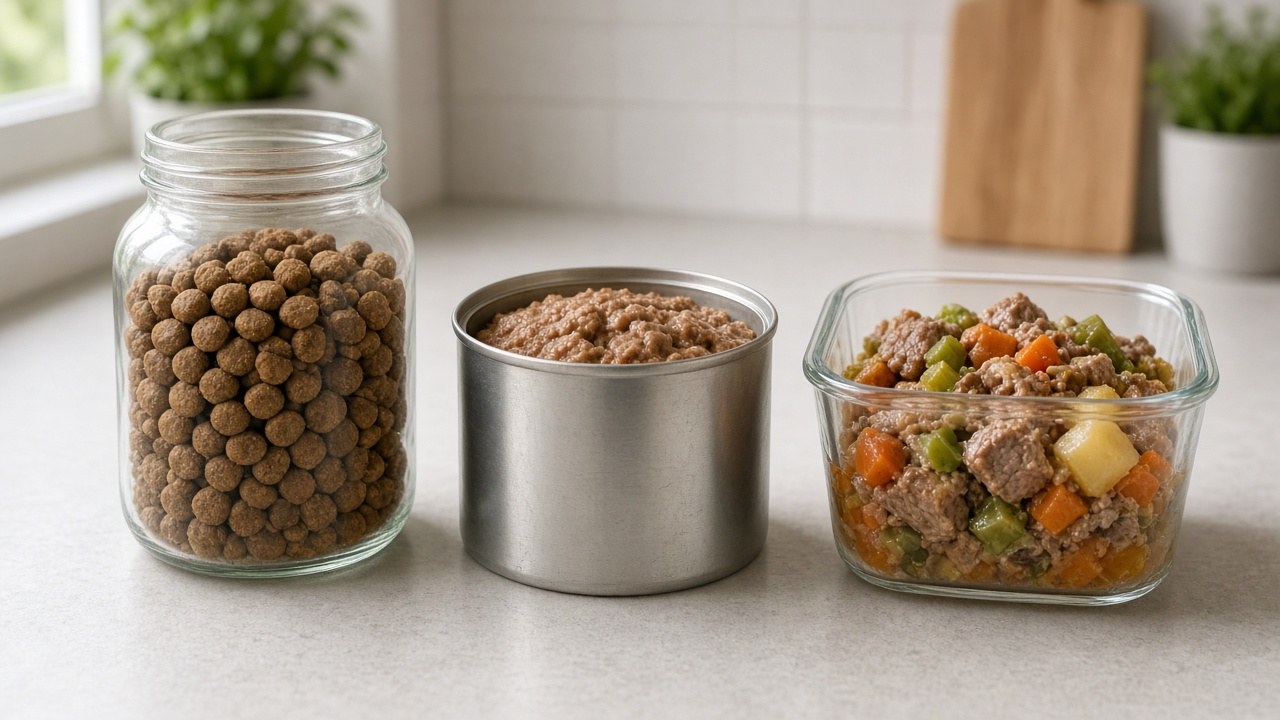
Water changes everything here. The FDA notes that canned pet food is typically 75 to 78 percent moisture, while dry food is typically 10 to 12 percent. So a can and a bag can carry similar amounts of a metal per gram of actual food and still show very different numbers as sold. The FDA says that to compare foods with very different moisture, you first convert to a dry matter basis.
FDA reviewers made the same point about metals. In a June 2011 review memo on a published analysis of 58 pet foods (31 dry and 27 wet), they called the failure to correct for moisture between wet and dry products a critical mistake. They also faulted the feeding amounts the authors assumed. Underfeeding the wet foods and overfeeding the dry ones, they wrote, made daily exposures from dry food look larger. The memo reviewed one analysis and isn't a regulation, but its logic applies whenever you see wet and dry numbers side by side.
Our guide on how to read pet food heavy metal test results walks through the dry matter math.
What studies found
Here's what three studies report, each in its own terms.
Brazil, 2021. A study of 100 commercial dog and cat foods in Scientific Reports reported its results on a dry matter basis, so moisture was already accounted for. Even so, dry foods had higher concentrations than wet foods for most of the toxic metals measured. The authors also found more mercury in their dry foods than their wet ones, and they note that this ran opposite to some earlier studies.
China, 2025. A study of 93 imported dog and cat foods sold in China, 79 dry and 14 canned, found that lead was not detected in the canned foods and that the canned foods met all of China's pet feed limits for the metals tested. Some dry samples exceeded the limits for lead and chromium. But the canned foods weren't simply "lower" across the board: the authors report that canned foods still had relatively high contamination rates for chromium, arsenic and mercury, and each canned sample had at least two of the metals tested. Two cautions apply. Only 14 of the 93 foods were canned. And the sources we reviewed did not state whether its results were as fed or dry matter, so its numbers shouldn't be compared with other studies.
Mercury, 2016. A study of mercury in wet and dry cat and dog food measured total mercury in 47 cat foods and 54 dog foods. Its abstract explains the authors' starting point: mercury concentrates in fish, and fish is an important pet food ingredient. They assumed the mercury was mostly methylmercury but said this still needs to be tested, and they noted there are no standards for mercury in pet food. The abstract doesn't report a wet versus dry comparison, so we don't claim one.
What this adds up to. One study found dry foods higher in most metals after correcting for moisture. Another found canned foods within limits but still carrying several metals, from a small canned sample. Format isn't a reliable shortcut.
Ingredients matter too
Across these studies, ingredients keep coming up. In the Brazil study, animal by-products generally had higher toxic metal concentrations than plant-based ingredients. Its authors suggest that the higher mercury they found in dry cat foods, compared with dry dog foods, could be linked to the larger amount of animal protein in cat diets. The 2016 mercury study began from the point that mercury concentrates in fish.
That means two foods in the same format can still differ, depending on what's in them. Our posts on lead, arsenic, and mercury in cat food and heavy metals in dog food cover where each metal tends to come from. Protein sources will get their own post.
What about fresh food?
By fresh, we mean refrigerated, cooked pet food. The sources we reviewed did not include a peer-reviewed study of heavy metals in fresh pet food, so there isn't a sound basis for saying how it compares. The FDA notes that heavy metals are found in air, water and soil, so ingredients in any format can carry some. The same questions apply to a fresh food as to any other.
Raw and freeze-dried foods will get their own post.
Before you switch
If a headline has you thinking about changing formats, slow down. A diet change involves much more than metals. Talk with your veterinarian first.
Then ask the brand of the food you feed now, or the one you're considering:
- Do you test this product for heavy metals, and how often?
- Can you share recent results?
- Are they reported as fed or on a dry matter basis?
For more questions to ask, see how to check cat food for heavy metals. Body size also affects how much a pet takes in, which our post on cats vs dogs covers.
FAQ
Is wet cat food lower in heavy metals than dry? Not reliably. Wet food often looks lower as sold because it's mostly water. After that's accounted for, results depend on the metal, the study and the ingredients.
Does dry pet food have more lead? Some studies we reviewed found dry foods higher in certain metals. In the China study, some dry samples exceeded the lead limit while the canned samples did not, though few canned foods were tested. Comparisons that skip the moisture correction can also make dry food look higher, as FDA reviewers pointed out. Ask the brand for results on the specific product.
Is fresh pet food lower in heavy metals? The sources we reviewed did not include a peer-reviewed study of heavy metals in fresh pet food, so we can't say.
Should I switch formats? Talk with your vet first. Then ask the brand for results on the product you feed.
A note on your pet's health
This article is general information, not veterinary advice. Talk with your veterinarian before changing your pet's diet.
Results tell you more than format
Whatever format you feed, product results tell you more than the format does. Heavy Metal Tested is a certification program that helps brands share independent results with owners. Learn how certification works.
Case Studies You May Be Interested In
 "Low in Heavy Metals" on a Pet Food Label: What It Means
Who checks the words on the bag, and how to make a claim checkable.
October 25, 2026
 How to Read Pet Food Heavy Metal Test Results
Four questions that turn a number into information.
October 24, 2026