




Heavy Metal Exposure in Cats: When to Call Your Vet
Why a checklist of signs can't answer the question, and what to do instead.
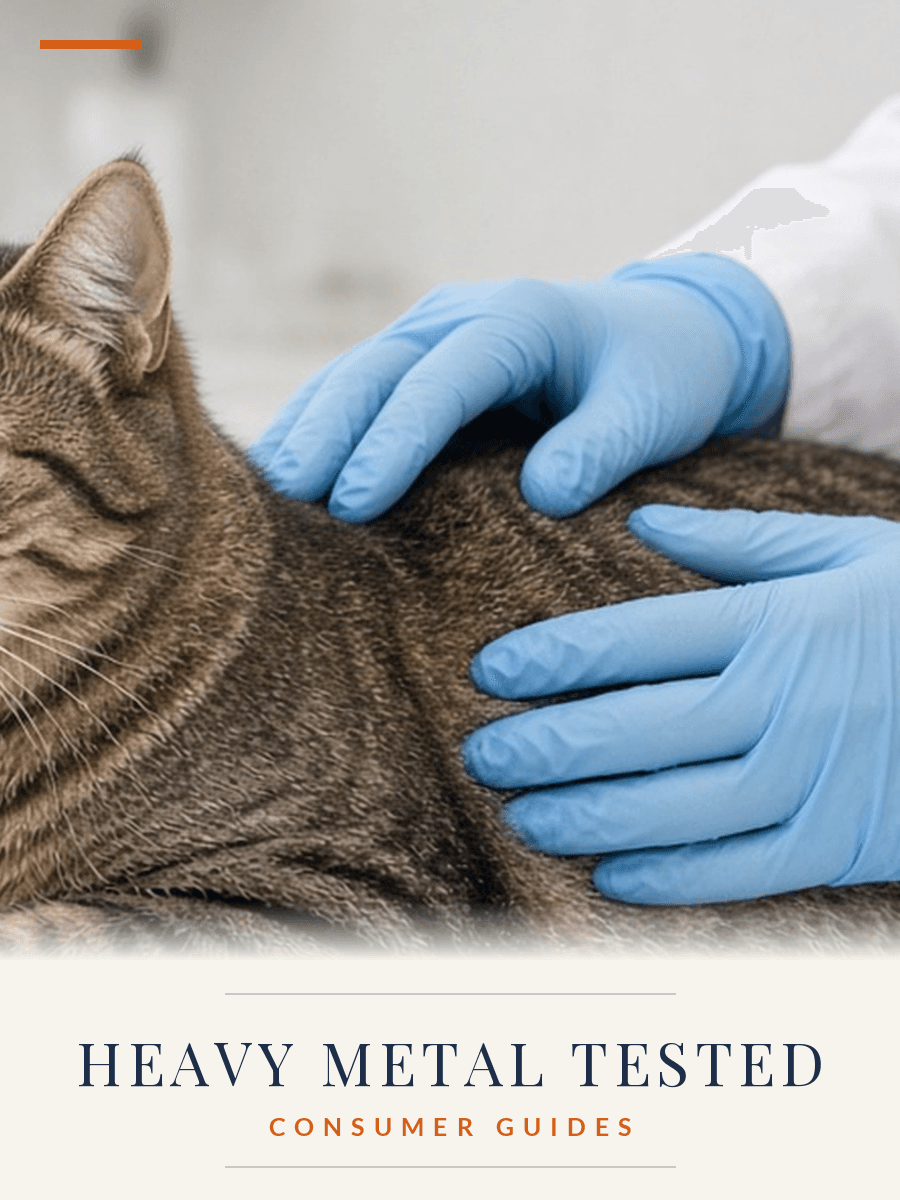
Worried about heavy metal exposure in your cat? Why signs are hard to read, what vets look at, what to keep, and when to call for help.

Abstract
Keywords
signs of heavy metal poisoning in cats, heavy metal toxicity in cats, lead poisoning in cats, can cat food cause heavy metal poisoning

After reading news about heavy metals in cat food, it's natural to start watching your cat more closely and wondering what you'd notice if something were wrong. This post won't give you a checklist of signs, because a checklist can't answer that question well. Instead, it explains why, what your vet can do, and the practical steps that help.
The short answer
There is no reliable checklist you can use at home. The Merck Veterinary Manual says signs of lead poisoning depend on the dose, the route, and how long exposure lasts, and Merck's mercury page says signs depend on the form of mercury and how much and how often an animal is exposed. A vet confirms lead poisoning with blood or tissue testing alongside an exam. Finding a metal in a food is not the same as a cat being poisoned, as our post on lead, arsenic, and mercury in cat food explains. If you're worried, call your vet. If it can't wait, call your vet, an emergency clinic, or an animal poison control line.
Why there's no simple list of signs
It would be easier if every metal caused the same changes. It doesn't. For lead, Merck says signs depend on the dose, the route of exposure, and how long it lasts. For mercury, Merck says they depend on the form of mercury and on the level and frequency of exposure. So two cats exposed to the same metal in different ways may not show the same changes.
Signs of heavy metal exposure can also look like other illnesses. When Merck describes how lead poisoning is diagnosed in dogs and cats, it lists other conditions a vet needs to consider and rule out. That's work for an exam and testing, not for a list on a screen.
There's also a simpler point. Any change in your cat that worries you is worth a call to your vet, whatever you think the cause might be. You don't need to match it to a metal first. Describe what you've seen, in your own words, and let your vet decide what to look into.
How vets look into heavy metal exposure
Your vet will start with questions about your cat's history and home, then examine your cat. For lead, Merck says the diagnosis is confirmed by measuring lead in the blood or in tissue, together with supporting findings from the exam and other tests. A detected level on its own isn't the whole picture; the vet reads it alongside everything else.
Merck's mercury page adds that when other sources have been ruled out, clinicians should consider unusual household sources of mercury in dogs and cats. In other words, vets think about the whole environment, not only the food bowl.
Whether testing makes sense for your cat is a decision for your vet. They know your cat's history and can weigh what is most likely. If you have questions about kidney health and cadmium in particular, see our post on cadmium and kidney health in cats.
Food or home? Where exposure can come from
Food is only one possible source, and for lead, the home matters a lot. The Cornell Feline Health Center notes that cats can be exposed to lead through paint chips, linoleum, and dust produced when surfaces in older homes are scraped or sanded. Merck calls renovation of old houses a common route of exposure in small animals, and notes that cats have taken in dust from sanded lead paint by grooming it off their coats.
For mercury, Merck describes human case reports, such as an older blood pressure gauge that broke at a home day care, and says pets could be exposed the same way.
Food can carry trace metals too. Our post on where heavy metals in cat food come from covers those routes. If you have a young cat, our post on heavy metals in kitten food explains why young animals absorb lead more readily.
What to tell your vet and what to keep
A little preparation makes the visit more useful. Before you go, gather:
- The food itself. The FDA asks owners to keep the original packaging if possible, since it identifies the variety, the plant, and the production date. If you pour dry food into another container, keep the bag.
- The details on the package. The exact product name, the lot number, the best by date, and where and when you bought it. FDA notes the lot number is often hard to find and sits close to the best by date.
- Your home history. Any recent renovation, sanding, or old paint, and anything unusual your cat could have chewed or groomed off its coat.
- What you noticed. Describe any changes in your own words, along with when they started.
- Other things your cat eats. Treats, supplements, or other foods.

If you think a pet food made your cat sick
Start with your vet. AAFCO advises that if your pet is sick, whether or not you suspect the food, you should first seek veterinary care and advice before doing anything else. AAFCO and its members are not practicing veterinarians and don't give veterinary advice.
You can also report the food to FDA through its online reporting portal. FDA says it reviews each report to decide whether follow-up is needed, and that even when no testing follows, the report becomes part of its surveillance to help prevent future problems. If you choose to have the food tested by a private lab, FDA notes this can be costly, and you can include any results in your report.
When it can't wait
If your cat seems seriously unwell, or you think it has swallowed something it shouldn't have, don't wait to research it. Call your vet or an emergency clinic right away. An animal poison control line can also help; some are open around the clock and charge a consultation fee.
This article is general information, not veterinary advice. If you think your cat has been exposed to a heavy metal or is unwell, contact your veterinarian right away.
FAQ
What are the signs of heavy metal poisoning in cats? They vary by metal, by dose, and by how long exposure lasts, and they can look like other illnesses. That's why a vet exam and testing are needed rather than a home checklist.
Can cat food cause heavy metal poisoning? Studies have found trace metals in cat foods, and the FDA's report on heavy metals in animal food found most animal food samples below maximum tolerable levels. Detecting a metal in food is not the same as poisoning. If you're concerned, ask your vet.
How do vets test a cat for lead? Merck says lead poisoning is confirmed by measuring lead in the blood or in tissue, together with findings from the exam and other tests.
Should I report a pet food I'm worried about? You can report it to FDA online. Keep the original packaging and note the lot number and best by date.
This article is general information, not veterinary advice. If you think your cat has been exposed to a heavy metal or is unwell, contact your veterinarian right away.
Want to know whether a brand tests its cat food for heavy metals? Heavy Metal Tested is a certification program that helps brands share independent results with owners. Learn how Heavy Metal Tested certification works.
Case Studies You May Be Interested In
 Contaminants in Baby Wipes: Your Questions, Answered
What was measured, what was only alleged, and what you can check yourself.
October 19, 2026
 Heavy Metals in Kitten Food: What New Cat Owners Should Know
Why young animals take in more lead, and what a growth label does and does not tell you.
October 19, 2026