



Why parents look for a certification mark on baby food
A pack signal parents can see.
Why parents look for a certification mark on baby food

Abstract
Keywords
certification mark on baby food, why parents look for a mark, Heavy Metal Certified mark, published subcategory standard, pack visibility, infant toddler food brands, certification program not laboratory, eligibility conversation, ISO/IEC 17025

Parents do not ask a quality team for a methods appendix. They look at a pouch, a cereal box, or a snack bag and try to decide whether the product stands behind a signal they can see. That pressure is real. It is also the most common reason a brand starts an eligibility conversation, and the most common reason a claim goes too far.
This page is written for quality, regulatory, and brand teams at US infant and toddler food companies. It explains the parent search as a conversion fact, not as a scare. It is not a parent blog. It does not tell families which brand to buy. It does not say a product is safe.
What the parent is actually asking
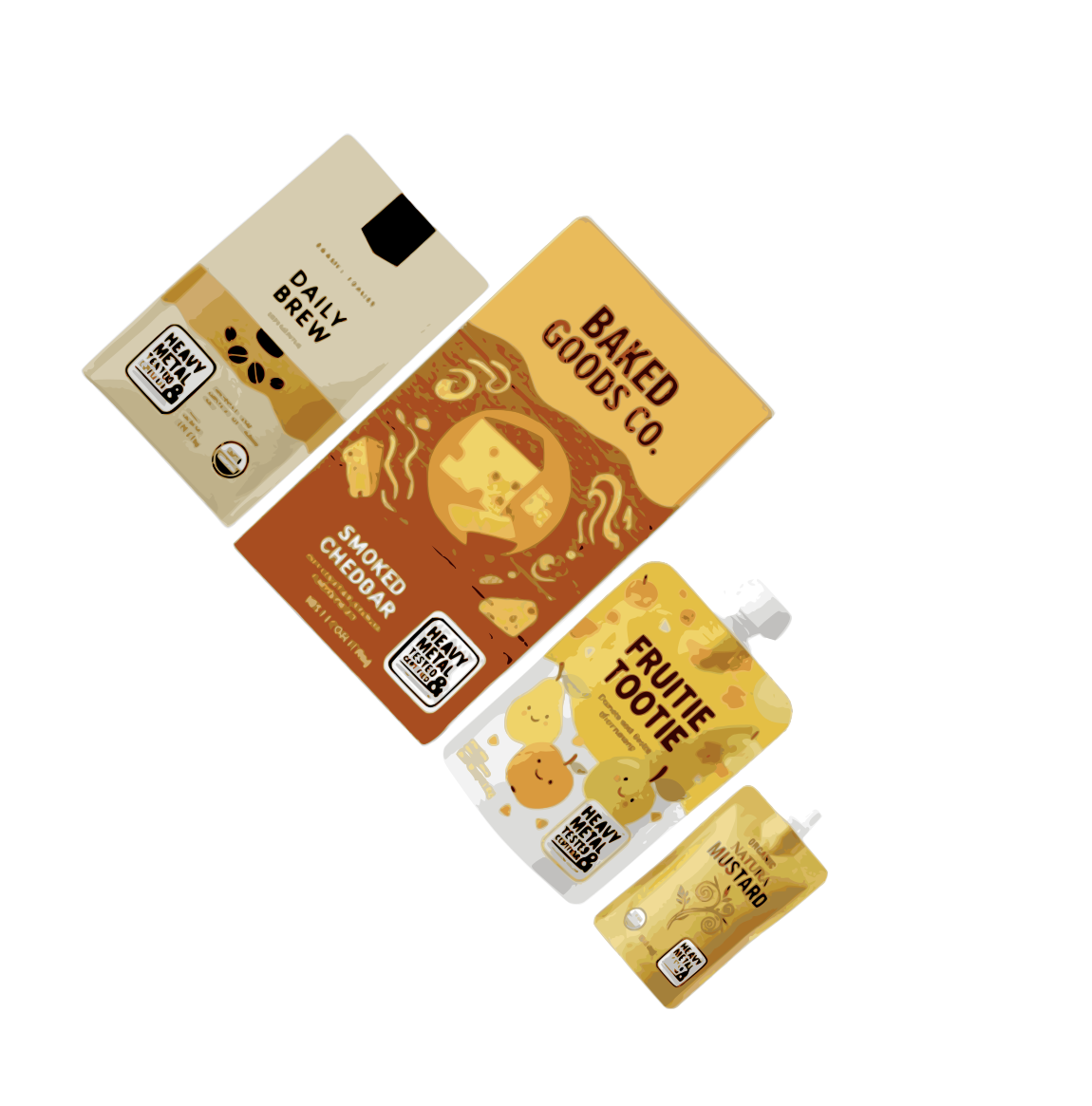
The search is usually some version of "does this baby food have a heavy-metal answer?" The pack is the first place they look. A QR code is a second place, if they are willing to interpret a result. A published standard behind a licensed mark is a third kind of object: a claim a reviewer can check without asking the parent to become an analyst.
Parents look for a mark because:
- Infant and toddler food is a daily habit, not a one-time purchase.
- Mixed foods combine agricultural inputs that can carry environmental contaminants.
- Public conversation about the category is easy to find and hard to parse.
- A PDF in a quality file is not visible in a grocery aisle.
None of that is a finding about a named brand. It is why infant and toddler food brands treat pack visibility as part of the eligibility conversation.
A mark is a license. Parent pressure is not.
Heavy Metal Tested is an independent Paleo Foundation certification that evaluates food, supplement, and consumer products against a published standard and licenses a mark to products that meet it.
It is a certification program, not a laboratory. Testing is coordinated through a qualified independent ISO/IEC 17025 laboratory. The Heavy Metal Certified mark is licensed only to products that meet the published subcategory standard. Certification is valid one year, with annual retesting. If a product does not meet the standard, the mark is not licensed. The program does not claim that a product is safe.
Parent search is a reason to consider a checkable claim. It is not a reason to print a slogan. It is not a reason to use an absence claim. It is not a reason to say the food is safe. It is not a reason to imply a government agency requires this certification.
On-pack meaning sits on what the Heavy Metal Certified mark means. Language that survives a reviewer sits on communicating testing without overclaiming.
What brands should not do with the search
- Do not treat comments-thread heat as a methods finding.
- Do not put a QR dump on pack and call it a seal.
- Do not borrow Paleo or Keto testimonials as Heavy Metal Tested proof.
- Do not publish a scorecard of named competitors as a parent answer.
- Do not license a brand-wide halo when only named SKUs were evaluated.
If the product does not meet the published standard, the mark is not licensed. That is the program working. Parent pressure does not change the licensing rule.
How teams usually convert the pressure into work
List the SKUs parents actually search. Map each to a published subcategory standard. Keep lot testing in the quality system. Then book eligibility. Eligibility is not an application and not a close.
The process from there: apply; coordinate testing through a qualified independent ISO/IEC 17025 laboratory; license the Heavy Metal Certified mark to products that meet the published subcategory standard; recertify annually with retesting.
Program identity: what Heavy Metal Tested certification is.
FAQ
Why do parents look for a mark instead of a lab PDF? Because a pack is visible and a PDF is not. A mark is a signal; a result is a measurement.
Does a mark mean the baby food is safe? No. The program does not claim that a product is safe.
Is parent search a reason to overclaim? No. It is a reason to decide whether a published standard and a licensed mark are the answer you want to stand behind.
Does this page tell parents which brand to buy? No.
How should a brand start? A 30-minute eligibility conversation. It is not an application and not a close.
Next step
If you own quality, regulatory, or brand claims for a US infant or toddler food line, book a 30-minute eligibility conversation. Bring the SKUs parents actually search. We will talk about whether a published standard and a licensed mark are in scope, not about answering a comments thread.
Case Studies You May Be Interested In
 Heavy Metal Tested vs Clean Label Project: Different Jobs
Different programs, different jobs.
September 14, 2026
 Plum Organics and Heavy Metals: A Brand-Safe Response
A search query, not a verdict.
September 13, 2026