



Heavy Metal Certification for Infant and Toddler Food Brands
A clear signal for the aisle parents watch most.
Heavy Metal Certification for Infant and Toddler Food Brands

Abstract
Keywords
heavy metal certification baby food, infant food certification, toddler food heavy metal testing, baby food brand certification, Heavy Metal Certified mark, third-party certification baby food

Parents of babies and toddlers read labels more closely than almost any other shoppers, and heavy metals are near the top of their list of concerns. For brands in this category, the question is practical: how do you give parents a clear, trustworthy signal about the products they are buying?
Heavy Metal Tested certification is one way. Here is how it works.
What certification is
Heavy Metal Tested is an independent certification program from the Paleo Foundation. Products that qualify can carry the Heavy Metal Certified mark.
To earn it, a product must:
- Be tested through a qualified independent laboratory accredited to ISO/IEC 17025.
- Meet a published standard covering eight metals: lead, arsenic, cadmium, mercury, chromium, nickel, tin, and aluminum.
- Be retested every year to keep the mark.
Standards are set by product subcategory and published on Heavy Metal Certified, so parents, retailers, and reviewers can read exactly what the mark stands for.
Which products fit
Infant and toddler food is the program's first focus, including:
- Infant cereals
- Purees in jars and pouches
- Puffs, melts, and teething snacks
- Toddler snacks and bars
- Toddler meals
- Children's supplements
Snacks are worth special attention. FDA's 2025 lead action levels for baby food do not cover snack foods like puffs and teething biscuits, so a published standard can fill a visible gap for parents. FDA Closer to Zero explained.
Certification is product by product. Most brands start with their best sellers and the products parents ask about most.
How it fits with your quality program
Most baby-food brands already test. Certification builds on that work rather than replacing it:
- Lot testing remains your ongoing quality check. Lot testing vs certification.
- California's AB 899 still requires monthly testing and public disclosure for baby food sold in the state. Certification does not satisfy it. AB 899 explained.
- FDA action levels remain the brand's responsibility.
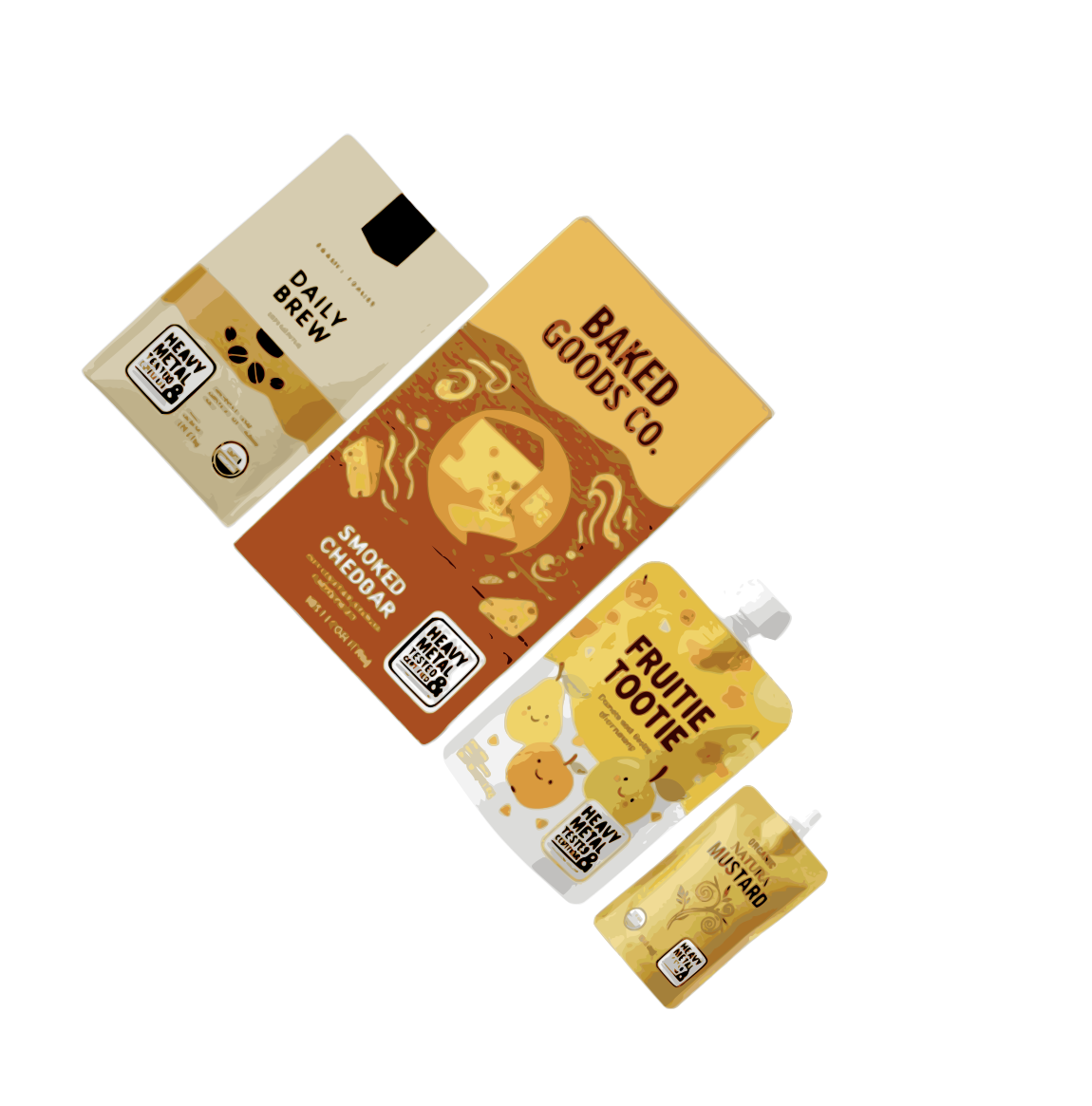
What certification adds is an independent, visible claim on the package that parents can recognize without reading a lab report.
What the mark does and does not say
The Heavy Metal Certified mark says a product was independently tested and met a published standard within the last year. It does not say a product is free of metals or safe, and it applies only to the specific certified product. It is voluntary, and no agency requires it. Keeping claims within those lines protects both the brand and the mark. How to talk about certification.
How to start
- Book a 30-minute call to talk through your products and which subcategory standards apply.
- Apply for the products you want to certify.
- Test through a qualified independent ISO/IEC 17025 laboratory.
- Receive the license for each product that meets the standard.
- Renew each year with retesting.
FAQ
Is Heavy Metal Tested only for baby food? Infant and toddler food is the first focus, but food, supplement, and consumer products can qualify when a published subcategory standard fits.
Is Heavy Metal Tested a laboratory? No. It is a certification program. Testing is done through qualified independent ISO/IEC 17025 laboratories.
Does certification replace our lot testing or AB 899 compliance? No. Both stay in place.
Does certification mean our product is safe? No. It means the product met a published standard when tested. It is not a safety guarantee.
Is certification voluntary? Yes.
Learn more
- What Heavy Metal Tested certification is
- Questions QA and regulatory teams ask
- Annual recertification
Next step
Own quality, regulatory, or brand for an infant or toddler food line? Book a 30-minute call to see which of your products fit.
Case Studies You May Be Interested In
 Cadmium and Kidney Health in Cats: What Research Shows
What cat studies have measured, and why found together is not the same as caused.
October 17, 2026
 Heavy Metals in Dog Food: What Owners Should Know
What dog-specific research shows about protein source, raw game diets, and puppies.
October 16, 2026