



How to Talk About Heavy Metal Testing on Baby Food Without Overclaiming
Be specific. Be accurate. Stop there.
How to Talk About Heavy Metal Testing on Baby Food Without Overclaiming

Abstract
Keywords
heavy metal claims baby food, baby food label claims, how to talk about heavy metal testing, heavy metal free claim, baby food marketing heavy metals, Heavy Metal Certified claim language

Parents are asking baby-food brands about heavy metals more than ever. Brands that test carefully want credit for it. But the words used on a package or product page matter, and some of the most tempting claims are the ones that cause the most trouble.
Here is language that is clear for parents and accurate enough to stand up to scrutiny.
Why "free of heavy metals" backfires
Heavy metals like lead, arsenic, and cadmium are naturally present in soil and water, so trace amounts are in nearly all foods. Modern labs can detect extremely low levels. A claim like "heavy metal free" or "zero heavy metals" is almost never literally true, and it invites challenges from regulators, reporters, and plaintiffs.
It also sets parents up for a surprise. If a family later sees a lot result with a trace detection, a "metal-free" claim looks misleading, even if the product is well within every standard.
The same goes for "safe" and "non-toxic." These are conclusions about health. A test result tells you how a product measured, not whether it is safe for every child.
Language that works
Specific, factual statements hold up well and are easier for parents to understand.
About your own testing:
- "We test every production lot for lead, arsenic, cadmium, and mercury."
- "Scan the QR code to see test results for this lot."
- "We source rice from regions with lower arsenic levels and test incoming ingredients."
About the Heavy Metal Certified mark, if a product has earned it:
- "This product is Heavy Metal Certified."
- "Independently tested through an ISO/IEC 17025 laboratory and certified to a published standard for eight heavy metals."
- "Certification is renewed every year with retesting."
- "See the standard at heavymetalcertified.com."
Language to avoid
| Instead of | Try |
|---|---|
| "Free of heavy metals" | "Tested for heavy metals every lot" |
| "Safe for your baby" | "Certified to a published heavy metal standard" |
| "Our whole line is certified" (when only some products are) | "Look for the mark on certified products" |
| "FDA-approved" or "required by law" (for a voluntary mark) | "Independently certified" |
| "Cleanest baby food" | "Tested and certified to a published standard" |
A few other cautions:
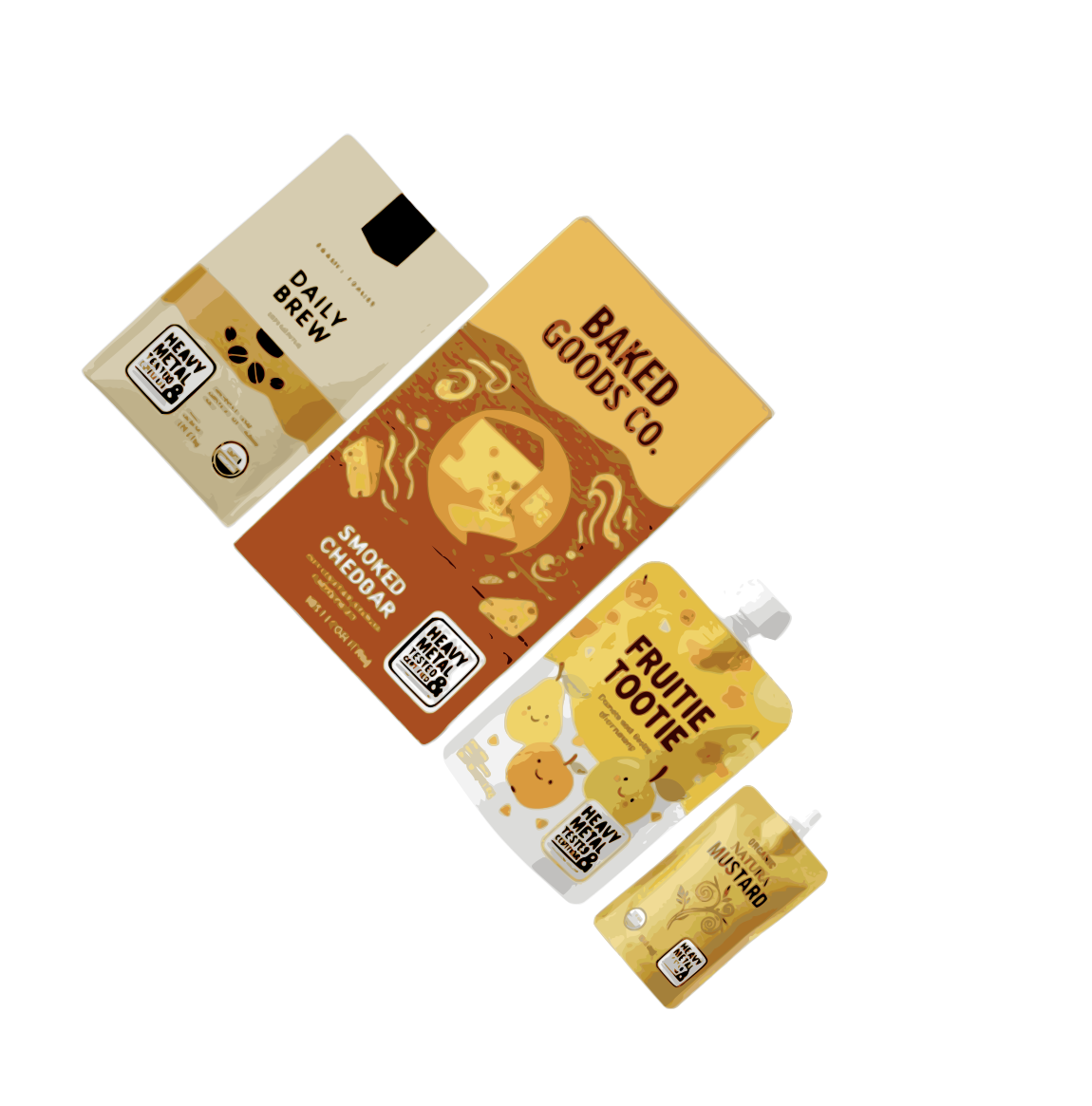
- Only use the mark on products that hold it. Certification is specific to each product.
- Keep other certifications separate. Organic, non-GMO, or Paleo certification does not say anything about heavy metals.
- Do not compare against named competitors. Comparative claims are hard to support and easy to challenge.
Why honest language builds trust
Parents are more sophisticated about this topic than they were a few years ago. Many know trace metals are in most foods. Clear, specific statements about what you test, how often, and where to see results tend to earn more trust than big promises. They also make your claims easier to defend if anyone asks.
Getting claims reviewed
Before new language goes on a package or website, have your regulatory and legal reviewers check it. If you are using the Heavy Metal Certified mark, the certification team can help you confirm that the wording matches what the certification covers.
FAQ
Can we say our product is "heavy metal free" if it is certified? No. Certification means a product met a published standard, not that it contains zero metals.
Can we say the product is safe? We recommend against it. Certification is not a safety guarantee, and "safe" is a health conclusion.
Can we say the government requires this certification? No. Heavy Metal Tested certification is voluntary.
Can we put the mark on every product in our line? Only on products that have been certified.
What is the simplest accurate statement? "This product is Heavy Metal Certified: independently tested and certified to a published standard for eight heavy metals, renewed every year."
Learn more
- What the Heavy Metal Certified mark means
- QR batch data vs a certification mark
- What Heavy Metal Tested certification is
Next step
Working on packaging or website claims about heavy metals? Book a 30-minute call to see whether certification fits your products and how to describe it.
Case Studies You May Be Interested In
 Cadmium and Kidney Health in Cats: What Research Shows
What cat studies have measured, and why found together is not the same as caused.
October 17, 2026
 Heavy Metals in Dog Food: What Owners Should Know
What dog-specific research shows about protein source, raw game diets, and puppies.
October 16, 2026