



The HBBF Baby Food Reports: What They Found and How Brands Can Respond
What the reports found, and what brands can do.
The HBBF Baby Food Reports: What They Found and How Brands Can Respond

Abstract
Keywords
HBBF report baby food, Healthy Babies Bright Futures heavy metals, what's in my baby's food report, HBBF 2019 report, HBBF 2022 homemade baby food, baby food heavy metals report, baby food brand response

Healthy Babies Bright Futures (HBBF) is a nonprofit alliance focused on reducing babies' exposure to neurotoxic chemicals. Its baby-food reports are some of the most cited sources on heavy metals in food for young children, and they still drive a lot of the questions parents ask brands today.
Here is what the reports found, and how brands can respond.
The 2019 report: "What's in My Baby's Food?"
HBBF tested 168 baby foods from 61 brands for arsenic, lead, cadmium, and mercury. Key findings:
- 95% of the foods contained at least one of the four metals.
- 1 in 4 contained all four.
- Four of seven infant rice cereals tested exceeded FDA's then-proposed 100 ppb action level for inorganic arsenic.
- Rice-based foods (rice cereal, rice puffs, teething biscuits and rice rusks), fruit juice, and carrots and sweet potatoes stood out.
The report also suggested lower-metal alternatives, like oatmeal or multigrain cereal instead of rice cereal, and frozen banana or chilled cucumber instead of rice rusks for teething. Read the 2019 report.
The 2022 report: "Is Homemade Baby Food Better?"
HBBF tested 288 foods, including store-bought baby food, homemade purees, and family foods, and reviewed more than 7,000 other published results.
- 94% of store-bought baby foods and 94% of homemade and family foods contained heavy metals.
- Levels varied by type of food, not by who made it.
- The ten most contaminated foods were rice cakes, crisped rice cereal, rice-based puffs, brown rice, rice teething biscuits and rusks, white rice, raisins, non-rice teething crackers, granola bars with raisins, and oat-ring cereal.
- Among the least contaminated were bananas, grits, butternut squash, apples, eggs, and most meats.
What the reports mean for brands
The reports make a few things clear:
- The issue is ingredient-driven. Rice, root vegetables, and some fruits and grains carry more metals regardless of brand or format. Sourcing and formulation are where brands have the most control.
- Parents want data they can see. Both reports pushed families to look for evidence, not just reassurance.
- Organic and homemade are not shortcuts. Neither format solved the problem in HBBF's testing.
How brands can respond
When a report like this lands, a clear and steady response tends to work better than a defensive one:
- Know your numbers. Review your own lot data for the product types the report highlighted.
- Look at sourcing and formulation. Rice-heavy snacks and root-vegetable-heavy blends are the obvious places to start.
- Make results easy to find. If you sell in California, AB 899 already requires you to publish lot results. Make that page clear and easy to reach from a QR code. AB 899 explained.
- Consider independent certification for products where parents want a simple signal on the package.
- Communicate plainly. Explain what you test, how often, and where to find results, without claiming products are metal-free. Communicating testing clearly.
Where certification fits
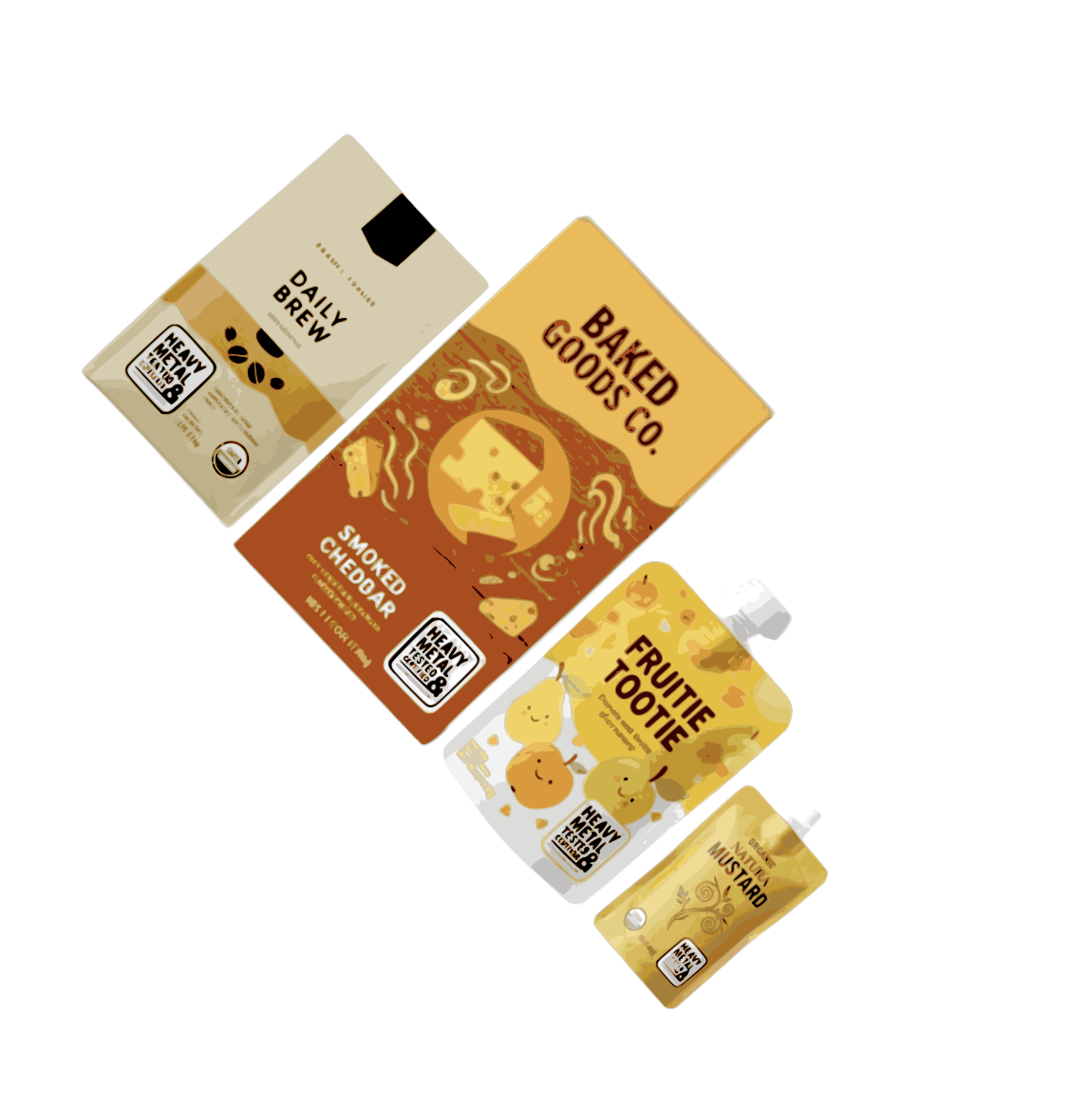
Heavy Metal Tested is a certification program from the Paleo Foundation. A product earns the Heavy Metal Certified mark when testing through a qualified independent ISO/IEC 17025 laboratory shows it meets a published standard covering eight metals. Certification lasts one year and renews with retesting.
A certification is not a response to any one report, and it does not mean a product is free of metals. It gives parents a consistent, checkable signal that lasts beyond a news cycle. What Heavy Metal Tested certification is.
FAQ
What did the HBBF report find? The 2019 report found heavy metals in 95% of 168 baby foods tested. The 2022 report found them in 94% of both store-bought and homemade foods.
Which baby foods did HBBF find highest in heavy metals? Rice-based foods led the list, including rice cakes, crisped rice cereal, rice puffs, and rice teething biscuits and rusks.
Is Heavy Metal Tested affiliated with HBBF? No. They are separate organizations.
Does certification mean a product would test well in a future report? Certification means a product met a published standard when tested. Independent reports use their own methods, samples, and benchmarks, so results are not directly comparable.
Next step
If a public report has prompted questions about your products, book a 30-minute call to talk through whether certification fits your line.
Case Studies You May Be Interested In
 Is Iron a Heavy Metal? Essential vs. Toxic Metals List
Why iron on a label isn't the same as lead in a test result.
October 13, 2026
 What's in Your Cat's Food? A 5-Minute Heavy Metals Check
A calm, practical way to check what's in your cat's bowl.
October 12, 2026