



Heavy metals in baby puffs and rusks: a snack category, not a scorecard
A snack category, not a scorecard.
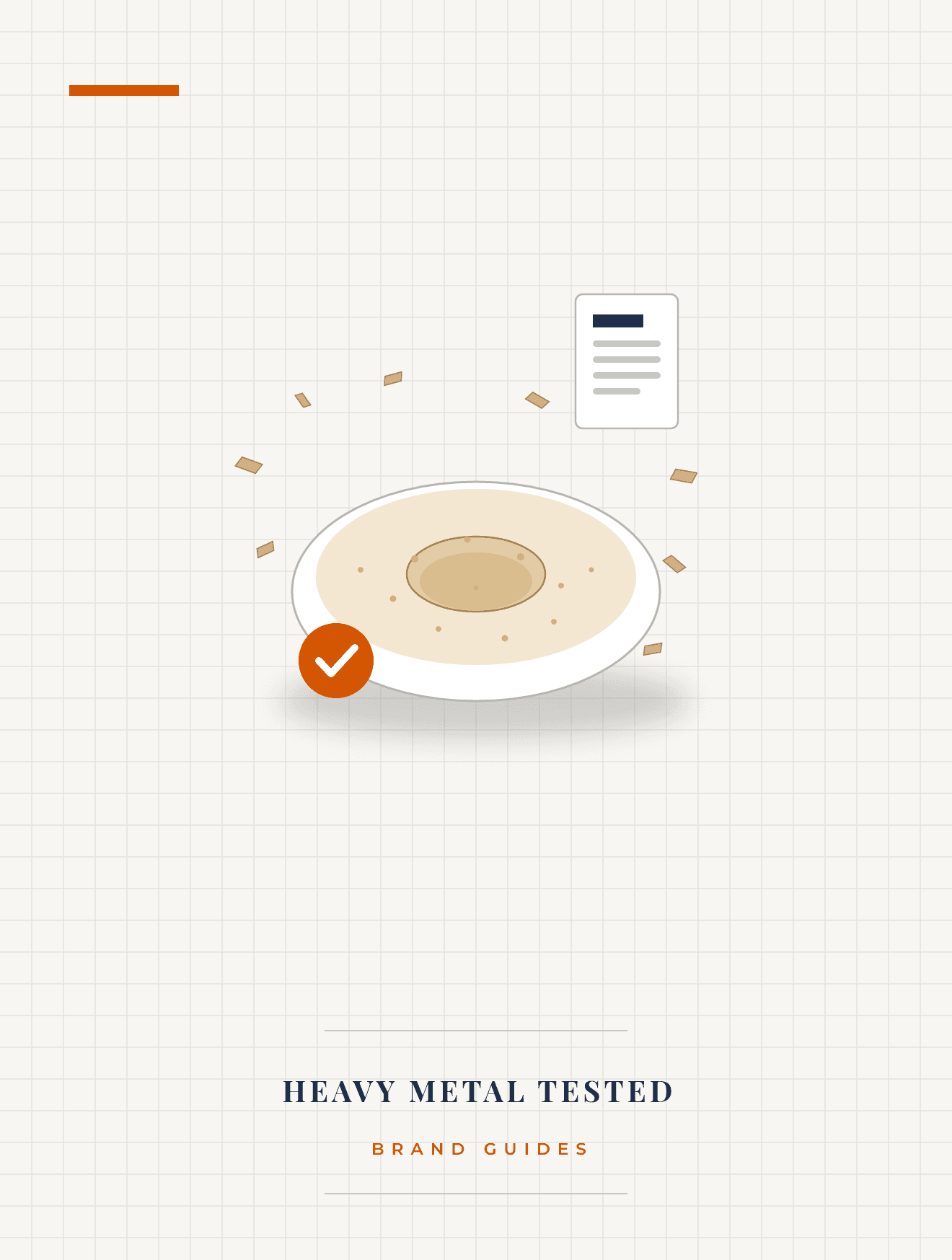
Heavy metals in baby puffs and rusks: a snack category, not a scorecard

Abstract
Keywords
heavy metals in baby puffs, baby rusks heavy metals, infant snack certification, Heavy Metal Tested, Heavy Metal Certified mark, published subcategory standard, lot testing versus certification, snack brand eligibility

Puffs, melts, and teething rusks are how a large share of US infants move from puree to self-feeding. They are also a durable parent-search category for heavy metals. This page is for quality and regulatory teams who own those SKUs. It is not a ranking of snack brands. It does not name analytes. It does not publish scores. It does not tell anyone to avoid a product.
The useful distinction is the same one that shows up across infant food: a category can warrant attention without any one brand being on trial, and a one-off test is not a licensed mark.
Why puffs and rusks sit in the search
These are dry, grain-based, often daily snacks. They are served in the high chair, packed in a diaper bag, and photographed on social feeds. Agricultural ingredients can carry environmental contaminants. A puff or rusk is a concentrated, shelf-stable format built from those inputs. Parents treat "first snack" as a trust moment, which is why the query persists even when a brand has a thick internal testing file.
None of that is a finding about a named product. It is why snack SKUs belong on an eligibility list if a company is going to certify anything in the infant aisle.
Adjacent formats sit on infant oatmeal and toddler snacks. The program identity sits on what Heavy Metal Tested certification is.
What a snack lot test does not do
A lot test on a puff or rusk tells you what was measured in that sample. It can support a spec. It can support a supplier conversation. It does not license a mark against a published subcategory standard, and it does not age into a year of on-pack language by itself.
Heavy Metal Tested is an independent Paleo Foundation certification that evaluates food, supplement, and consumer products against a published standard and licenses a mark to products that meet it.
It is a certification program, not a laboratory. Testing is coordinated through a qualified independent ISO/IEC 17025 laboratory. The Heavy Metal Certified mark is licensed only to products that meet the published subcategory standard. Certification is valid one year, with annual retesting. If the snack SKU does not meet the standard, the mark is not licensed. The program does not claim that a product is safe.
Read lot testing versus certification.
How snack brands usually scope the work
- List the puff, melt, and rusk SKUs that actually sell, not the full innovation pipeline.
- Map each to a published subcategory standard before anyone talks about pack changes.
- Treat current lot data as context for eligibility, not as the mark.
- Keep statutory testing-and-disclosure duties in the regulatory file. Certification does not replace them.
- Do not use an absence claim on a snack pack. Do not imply a government agency requires this certification.
A puff is parent-visible. Overclaims travel. If you certify a snack SKU, say that the product was evaluated against a published standard and that the mark is licensed because it met that standard. Stop there. Do not upgrade the sentence into a health claim. Do not borrow Paleo or Keto history as proof.
The process, without theater
When a product is in scope: apply; coordinate testing through a qualified independent ISO/IEC 17025 laboratory; license the Heavy Metal Certified mark to products that meet the published subcategory standard; recertify annually with retesting.
Eligibility is the first conversation. It is not an application and not a close. It is the point at which both sides see whether the subcategory, the SKU set, and the published standard even fit.
FAQ
Why are puffs and rusks a heavy-metal search category? They are an early, daily, grain-based snack. Search follows the eating occasion, not a laboratory method.
Does a lot test on a puff equal certification? No. A lot test is a measurement. Certification licenses a mark against a published standard.
Can we make an absence claim on a snack if we certify? No. The program does not license an absence claim and does not claim a product is safe.
Do you publish snack scores for named brands here? No. This is a category page, not a scorecard.
How should a snack brand start? A 30-minute eligibility conversation on the SKUs that actually sell.
Next step
If you own quality, regulatory, or compliance for a US infant puff, melt, or rusk line, book a 30-minute eligibility conversation. Bring the SKU list and the subcategory you think you are in. Eligibility is not an application and not a close.
Case Studies You May Be Interested In
 Heavy metals in root-vegetable baby food: a soil-grown category, not a scare
Soil-grown staples, published standard.
September 20, 2026
 HBBF report: what baby-food brands should do with a public finding
A report is not a mark.
September 19, 2026