



Heavy metal certification for infant and toddler food brands
A mark for the aisle parents search.
Heavy metal certification for infant and toddler food brands

Abstract
Keywords
infant toddler food certification, Heavy Metal Tested, Heavy Metal Certified mark, certification program not laboratory, baby food brand guides, lot testing versus certification, ISO/IEC 17025, eligibility conversation

US infant, child, and family food brands sit in a category where parents search, retailers ask, and policy keeps moving. The question that reaches a quality desk is practical: can we put a checkable mark on this product line, and what does that commit us to for the next year?
This page is the first-cycle overview for that audience. It is not a ranking of baby-food brands. It is not a laboratory. It does not name analytes. It does not say a product is safe.
Who this is for
The first readers are usually people in Quality, QA, Regulatory, Compliance, Food Safety, Legal, Product, or Operations at companies that sell infant cereals, pouches, purees, snacks, and related toddler foods in the United States. Children's dietary supplement SKUs are in the same conversation when the product is in scope. The reader we have in mind already tests lots. They do not need a lecture on why measurement exists. They need a rule for when a measurement supports on-pack language.
Heavy Metal Tested is an independent Paleo Foundation certification that evaluates food, supplement, and consumer products against a published standard and licenses a mark to products that meet it.
It is a certification program, not a laboratory. Testing is coordinated through a qualified independent ISO/IEC 17025 laboratory. The Heavy Metal Certified mark is licensed only to products that meet the published subcategory standard. Certification is valid one year, with annual retesting. If a product does not meet the standard, the mark is not licensed.
Start with what Heavy Metal Tested certification is. Format-level context for pouches sits on heavy metals in baby food pouches.
Why infant and toddler food is the first conversation
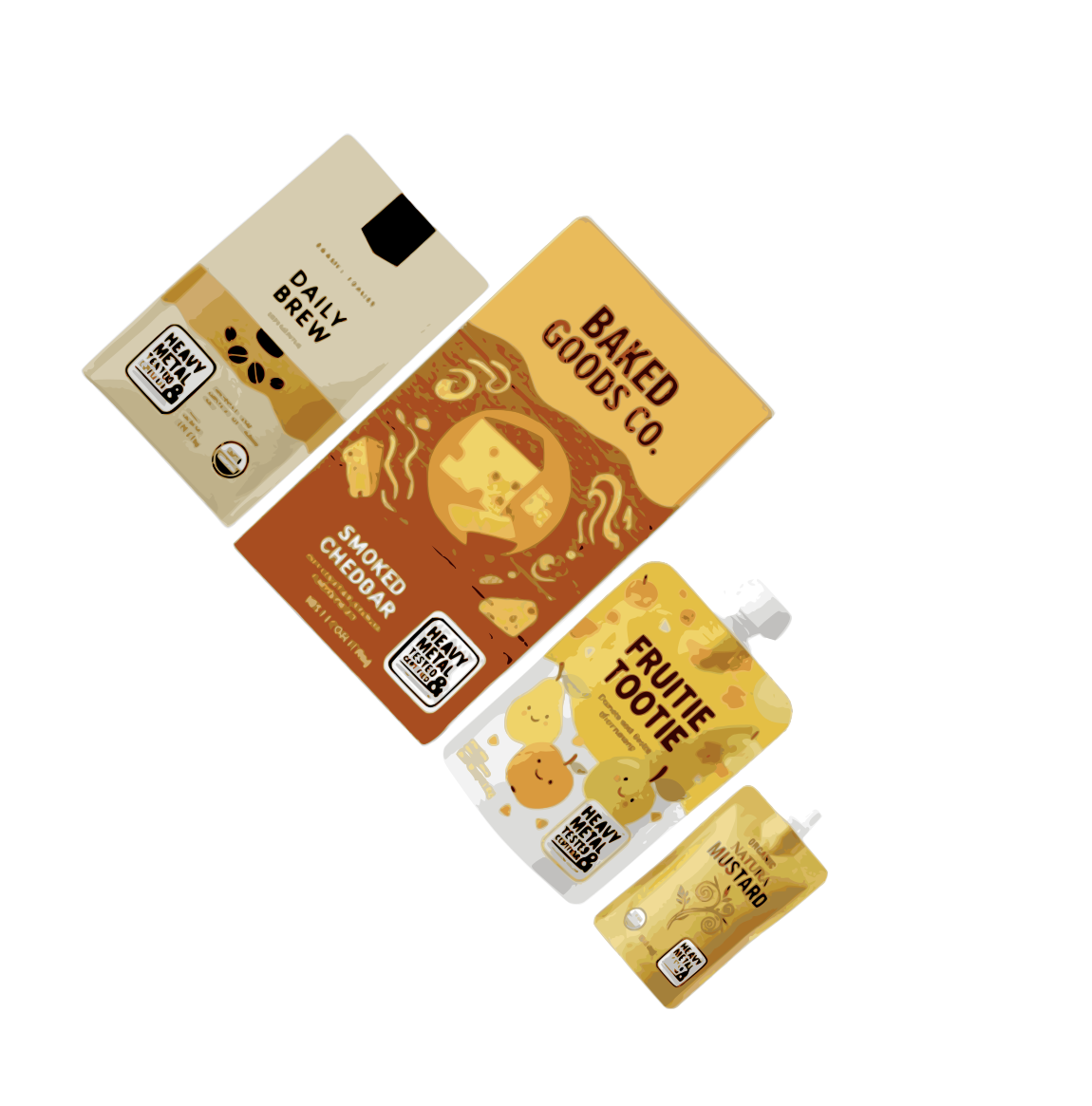
These products are eaten daily by the audience that searches most. Mixed foods combine agricultural inputs. Packs are highly visible. A parent looking for a signal looks at the pouch, the cereal box, or the snack bag first. A reviewer looking for a standard looks for a document they can read. Certification is built for those two surfaces.
None of that is a scare. It is why infant and toddler SKUs are where eligibility conversations start. A one-off test remains a snapshot. A licensed mark is a year of claim control, with annual retesting.
What certification adds on top of a quality system
Most brands in this aisle already test. That work is necessary. It is not the mark. A lot result tells you what was measured in a sample. Certification decides whether a named product met a published subcategory standard and whether the mark may be licensed.
See lot testing versus certification. Certification does not replace incoming inspection, finished-product monitoring, or any statutory testing-and-disclosure duty. Those obligations belong to the brand.
What the program does not do
- It does not claim that a product is safe.
- It does not license an absence claim.
- It does not make a product approved or preferred by a government agency.
- It does not replace a statute or a retailer's own vendor program.
- It is not a public roster of certified clients used as proof.
- It does not turn Paleo or Keto certification history into evidence for Heavy Metal Tested.
- It does not start with an application packet.
Those limits are what keep the mark usable in a regulatory review. A claim that cannot be defended is worse than no claim.
How brands in this aisle usually start
Map the SKUs parents actually search: everyday pouches, cereals, and snacks, not a one-off seasonal flavor. Match each to a published subcategory standard. Treat current lot data as input, not as a licensed mark. Then book eligibility. Eligibility is not an application and not a close. Details live on applying for eligibility.
The process from there: apply; coordinate testing through a qualified independent ISO/IEC 17025 laboratory; license the Heavy Metal Certified mark to products that meet the published subcategory standard; recertify annually with retesting.
FAQ
Is this only for infant food? Infant, child, and family food is the first-cycle focus. Food, supplement, and consumer products can be in scope when a published subcategory standard fits.
Is Heavy Metal Certified a laboratory? No. It is a certification program. Testing is coordinated through a qualified independent ISO/IEC 17025 laboratory.
Does certification mean the food is safe? No. The program does not claim that a product is safe.
Is this voluntary? Yes. No government agency requires this certification.
How do we start? A 30-minute eligibility conversation. It is not an application and not a close.
Next step
If you own quality, regulatory, or compliance for a US infant, toddler, or family food line, book a 30-minute eligibility conversation. Bring the SKUs that actually sell. We will talk about whether a published subcategory standard and a licensed mark are in scope.
Case Studies You May Be Interested In
 Heavy metals in root-vegetable baby food: a soil-grown category, not a scare
Soil-grown staples, published standard.
September 20, 2026
 HBBF report: what baby-food brands should do with a public finding
A report is not a mark.
September 19, 2026